Weekly Cantata

Weekly Cantata

Tag Archives: John Eliot Gardiner

First Sunday of Advent 1724: Bach helps commemorate and explain a 200-year-old hymn text

30 Saturday Nov 2024

Posted by cantatasonmymind in Advent, Cantatas, Chorale cantatas 1724/1725, Leipzig

≈ Leave a comment

Tags

Advent 1, Antonia Frey, bachhaus-eisenach, Bachstiftung, baroque-music, Benedikt Kristjánsson, BWV 62, choral-music, erfurter-enchiridion, erfurter-handbuchlein, evangelischer-lieder-commentarius, history, J.S. Bach Foundation, J.S. Bach Stiftung, Jan Kobow, johann-martin-schamel, John Eliot Gardiner, l500b300, Lisa Andres, Lydia Vroegindeweij, martin-luther, Rudolf Lutz

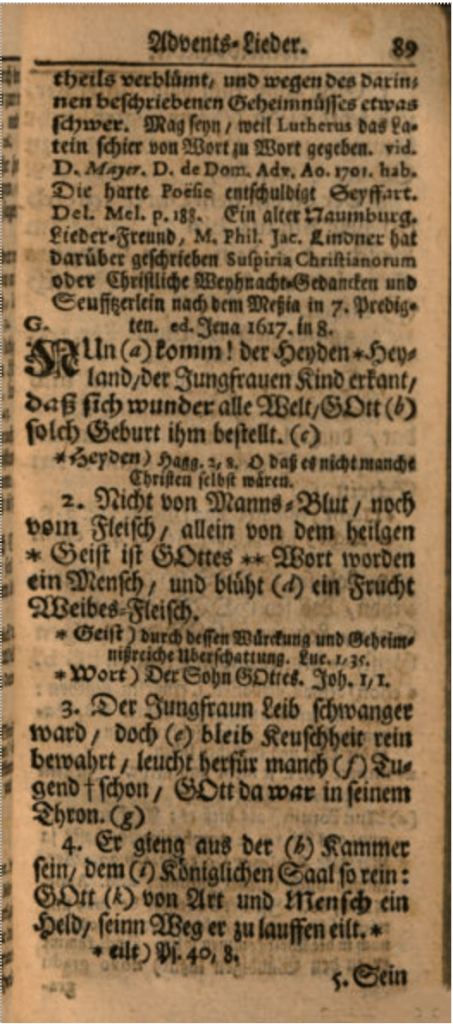
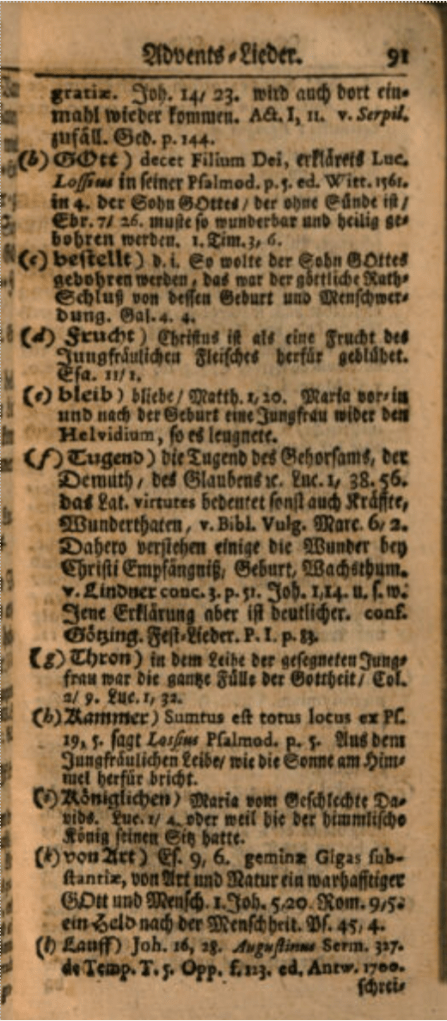
Evangelischer Lieder-Commentarius (Evangelical Hymn Commentary) by Johann Martin Schamel from 1724: an annotated hymnal, published to commemorate the bi-centenary of Luther’s first hymnals. From left to right: the title page; page 89 with the first four verses of Luther’s hymn “Nun komm, der Heiden Heiland,” with lower-case letters and asterisks referring to footnotes; page 91 with the footnotes.

Please open this post in your internet browser (just click on the title at the top) to see the images placed the correct way – thank you!

Today’s cantata – Happy 1st Advent!

Warning: If you don’t feel like reading science journalism, and just came here to listen to a beautiful cantata, I got you: here is Cantata 62 Nun komm, der Heiden Heiland in an excellent new live performance by the J.S. Bach Foundation under the direction of Rudolf Lutz. I especially love the opening chorus as well as the tenor aria, sung from memory by Benedikt Kristjánsson (read more about him in my post about the Bachfest in Leipzig this past summer). Other soloists are Lisa Andres, soprano; Antonia Frey, alto; and Peter Harvey, bass.

Find the German text with English translation here, and the score here.

A special exhibition in Eisenach

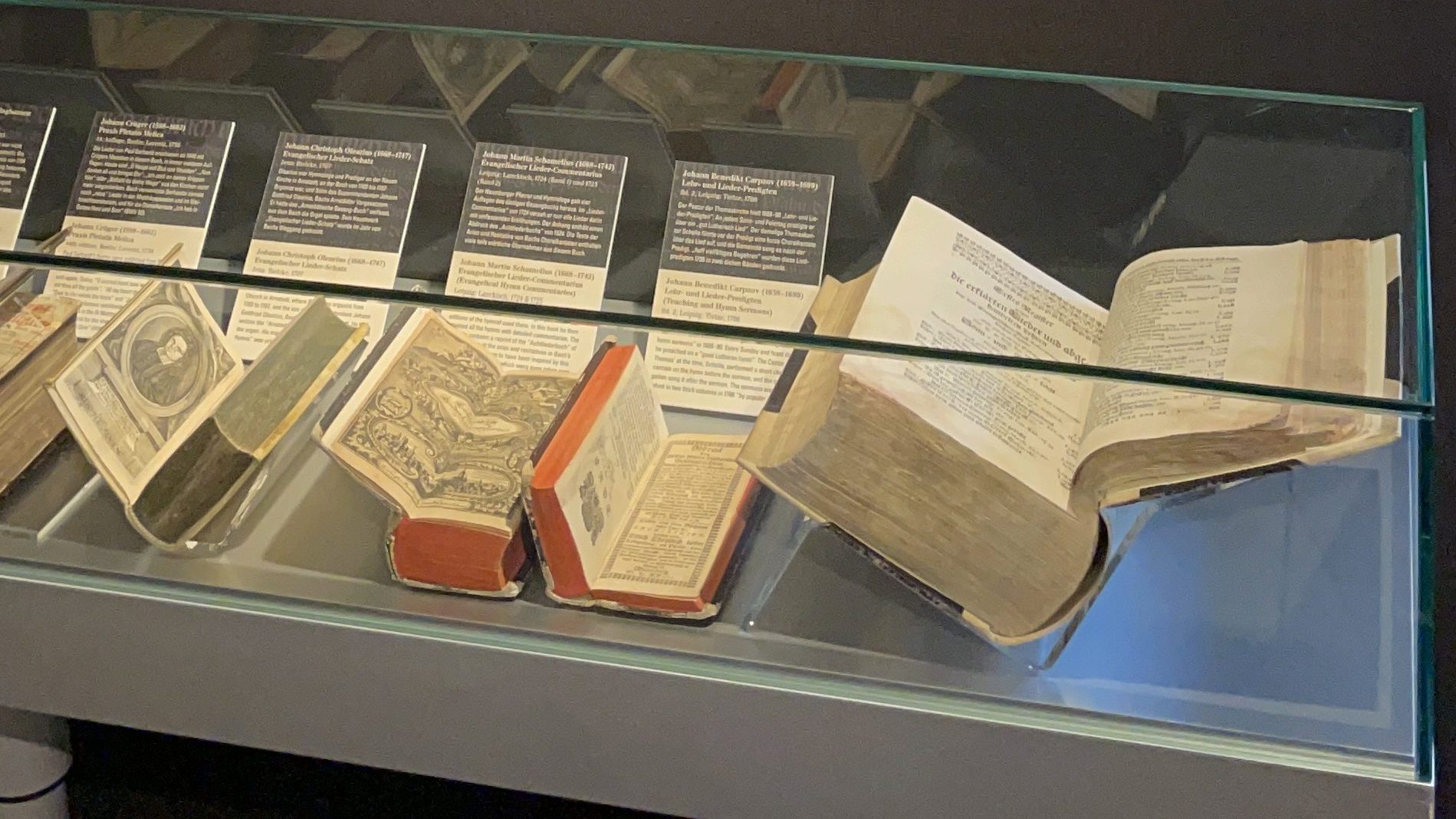
A month ago, I traveled to Eisenach (Bach’s birthplace in Germany) to catch the last days of a special exhibition at the Bachhaus on the double anniversary of Luther’s hymns (500 years) and Bach’s chorale cantatas (300 years) and the connection between the two. I got to see in real life many hymnals that were in use during Bach’s time. What struck me right away was how small and narrow they are! They were truly meant to be held in one hand (so one could leaf through it with the other hand). This is of course exactly what Luther envisioned when he published the very first German-language hymnals in 1524: that churchgoers could read and sing along during the church service, and also easily use the hymnals at home and at school. This photo gives a good idea of their size compared to a larger book:
Luther’s “Nun komm, der Heiden Heiland”

“Nun komm, der Heiden Heiland” in the Erfurter Enchiridion from 1524.

While most of the hymnals were displayed as in the photo above, the two oldest and rarest, on loan from libraries in Regensburg and Strasbourg, were hidden behind thick felt flaps to protect them from the light. One of these, Luther’s Erfurter Enchiridion (Erfurter Handbook) from 1524, lay opened to his Advent hymn “Nun komm, der Heiden Heiland,” the hymn Bach used two hundred years later, for Cantata 62 Nun komm, der Heiden Heiland for the first Sunday of Advent. Luther based this hymn on the then still well-known “Veni redemptor gentium” from the 4th century, closely translating the latin, and only slightly altering the melody.

Publications commemorating the bi-centenary of Luther’s hymnals in 1724 likely influenced Bach

Bach scholars have always wondered why Bach wrote an entire cycle of cantatas based on hymns. Some offer that his first cycle of cantatas (1723/1724) must have been too complicated for his audience (the Leipzig churchgoers) and that Bach, or possibly his employers, thus came up with something extremely familiar (the hymns) as a common thread for the second cycle of cantatas. Others say that the ability of the boy sopranos must have been so bad, judging by letters Bach later wrote to complain about this, that he switched to chorale cantatas so the choir sopranos would only have to sing the well-known chorale melody while the altos, tenors, and basses would sing more complicated parts.

While none, a combination, or part of these hypotheses might be true, recent research by Dutch theologian Dr. Lydia Vroegindeweij provides us with a third theory: Bach was very likely influenced by a strong movement in Lutheran Germany in the first quarter of the 18th century for the preservation and clarification of the original Lutheran hymns. His choice of 1724 as the year to start a cycle of chorale cantatas would thus not have been a coincidence at all, but a way to help commemorate the centenary of Luther’s first hymnals. The most important figures in this movement operated in Bach’s circle of friends and colleagues and of course Bach was a great admirer of Luther, having Luther’s entire oeuvre of writings in his library. So he would have been more than interested to support the efforts to preserve and better explain Luther’s hymns.

Specifically, Lydia makes a strong case that Bach and/or his anonymous librettist must have consulted Johann Martin Schamel’s Evangelischer Lieder-Commentarius (see the caption heading this post) for the recitative and aria texts for several if not all of his chorale cantatas. She has pointed out that many chorale cantata texts correspond to Schamel’s explanations, use the exact same words, or even follow Schamel’s suggestion to combine Luther’s psalm in question with another one (as is the case in Cantata 38, read more here).

As Lydia explains in a podcast she now has on a Dutch radio station, Luther’s hymn “Nun komm, der Heiden Heiland” especially needed clarification, because in an effort to make the text rhyme and stay as close as possible to the original “Veni redemptor gentium,” Luther had made the text so compact that it had puzzled many hymnologists and clergy.

How does Bach illustrate Schamel’s explanations of this particular hymn?

In the first stanza (the literal text of the opening chorus), Schamel puts (a) after the word “Nun” (now) and explains [freely translated]: “As if it meant: Oh come now, you promised! Instead, it is the poetic style, and is not meant as if the Savior had yet to come into the world. But he comes to believers daily, again and again, each time as a new step of grace.” This concept of “again and again” and the “steps” are clearly present in the music of the opening chorus of Cantata 62.

Lydia says: “Schamel substantiates this with a reference to John 14:23. This corresponds with Luther’s own explanation of this verse in the Calov Bible [which Bach was also familiar with, and added to his own library in 1733]. There Luther also talks about daily contact, and about Jesus who would like to live with people in their houses and share a meal with them.”

The emphasis in this cantata is placed more on the sacred miracle of the human birth and less on the “coming”. This “Wunder” (miracle/wonder) is even more celebrated in the tenor aria. Lydia says: “The aria emphasizes that God encompasses the whole world with that kind of miracle and that we can only admire that grace.”

And the prize for the best interpretation of the tenor aria goes to …

When two years ago Lydia and I searched for the best interpretation of the tenor aria, i.e. the one that really emphasizes the “wonder,” our prize went to Jan Kobow on the Gardiner recording from 2000. Listen to it here. Kobow does a beautiful job expressing the wonder, not only in the first phrase, but also in the B-section when he sings “o, Wunder”. He also makes a striking contrast between those wondrous and quiet-making aspects of the miracle and the stronger, more convinced text of “Herrscher.”

However, now that I’ve heard and seen Benedikt Kristjánsson sing on the recording with the J.S. Bach Foundation, his singing strikes me as the perfect illustration of “God encompasses the whole world with that kind of mystery.”

Further reading

If you would like to do your own reading and interpreting of Schamel’s commentary, you can find it here (in German). If you would like to subscribe to Lydia’s newsletter, you can do so here. Also, please don’t forget to subscribe to my blog – just fill in your email address here below, and you will receive an email every time I post a new story. Thank you!

Wieneke Gorter, November 30, 2024.

About Weekly Cantata

I am a bilingual writer, publicist, choral singer, art and nature lover, foodie, happy wife, and blessed mother of two. I started this blog in 2016, inspired by my late mother’s love for Bach’s cantatas. After 23 years in the San Francisco Bay Area, I’m now back in the Netherlands.

If you are on social media, please follow me:

  • Facebook
  • Instagram

Please subscribe!

Please subscribe to this blog! Simply fill in your email address and you’ll receive an email every time I’ve published a new post. Thank you!
Historic Churches and a Comforting Duet – Third Day of Christmas 2023

27 Wednesday Dec 2023

Posted by cantatasonmymind in Cantatas, Christmas, Leipzig, Weimar

≈ Leave a comment

Tags

Agnes van Laar, Bach, BWV 248/3, cantatas, Christmas, Christmas 3, Christmas Oratorio, Claron MacFadden, Dietrich Henschel, germany, John Eliot Gardiner, Marc Pantus

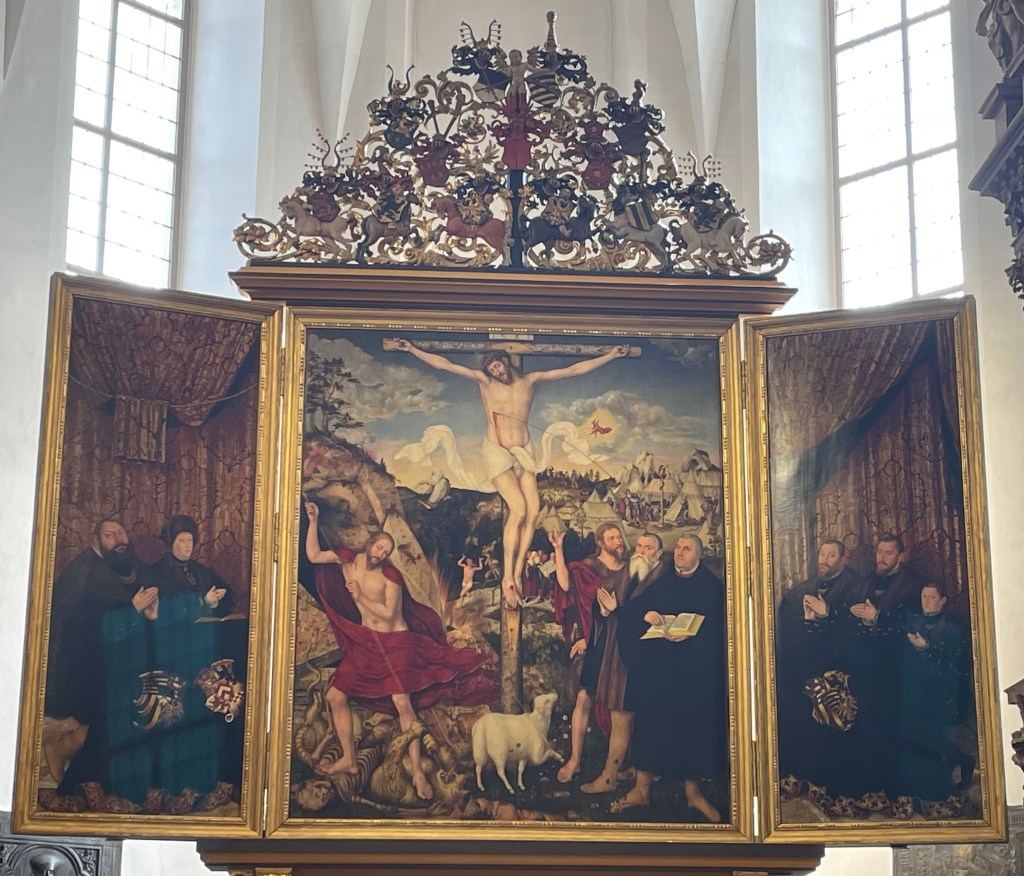
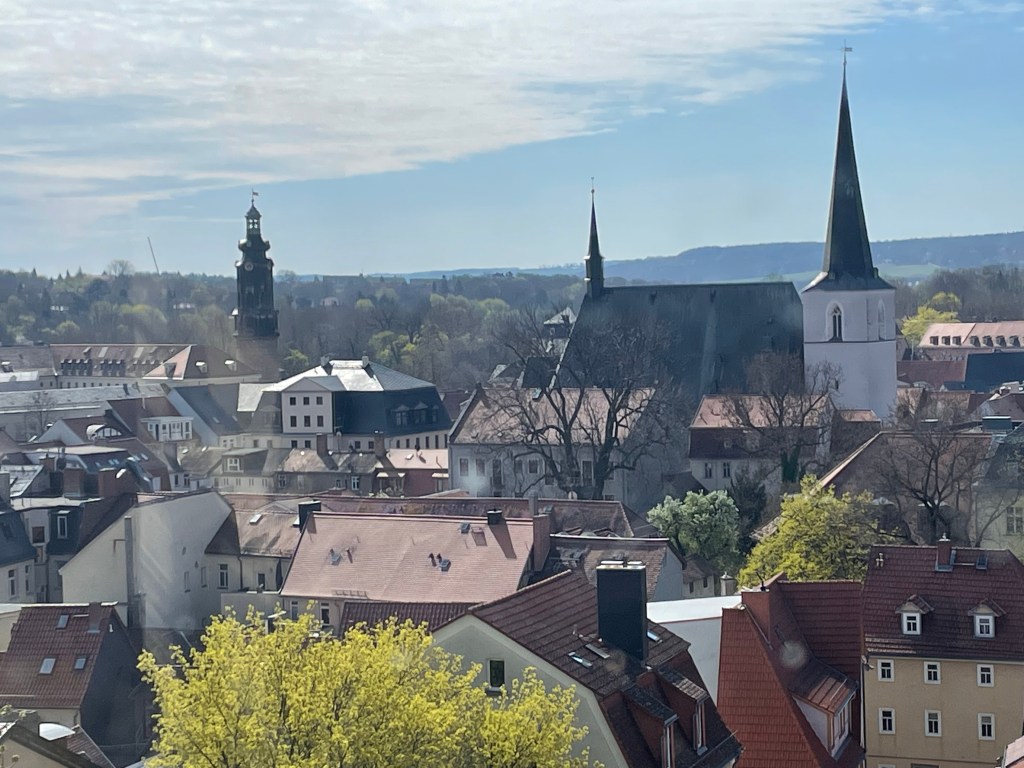
Photos from my visit to Weimar in April 2022: The famous altarpiece by Cranach in the St. Peter and Paul church or Herder church and the view over Weimar from the bell tower of St. James church. In the righmost photo you can see on the left the tower of the Bastille where Bach was held prisoner for a month, and on the right the Herder church. In addition to his job at the Duke’s castle, Bach played the organ at both St. James church and Herder church.

I hope you all had a meaningful Advent season and a merry Christmas. I needed to be with friends and family this month, and craved to hear music in old churches. It all worked out and I had one of the best Christmas seasons ever in recent years. I’m sorry that because of spending my time this way, I did not get to share any thoughts or music on this blog. If you went searching in my archives on your own, please let me know in the comments what you listened to. If you ever find youtube links that no longer work, please comment under the specific post or simply send me an email.

Why the photos of Weimar at the top of this blog post?

It’s because of a video I would like to share here today.

One of the best pieces of music I heard in an old church this month was the duet “Herr, dein Mitleid, dein Erbarmen” (Lord, your compassion, your mercy) from the third cantata of Bach’s Christmas Oratorio, written for today, the Third Day of Christmas. On December 10, I heard this excellently performed by soprano Agnes van Laar and bass Marc Pantus in the stunning Saint Martin’s church in Bolsward, the Netherlands.

This duet doesn’t usually appear among the “greatest hits” of Bach’s Christmas Oratorio but I just love the way the instrumental and vocal parts move together, and I am also moved by the text. I was searching for a good live video performance of this duet to share here today, and liked Gardiner’s the best, with soprano Claron McFadden and bass Dietrich Henschel. Please find that video here. Here is the text:

Herr, dein Mitleid, dein Erbarmen
Tröstet uns und macht uns frei.
Deine holde Gunst und Liebe,
Deine wundersamen Triebe
Machen deine Vatertreu
Wieder neu.

Lord, your compassion, your mercy
console us and make us free.
Your gracious favour and love,
your wondrous desires
make the love you have for us as a father
again new.

While watching this video, I realized that MacFadden and Henschel are singing at the Herder church in Weimar, directly in front of the famous Cranach altarpiece. I cannot really describe in words how thrilling it was for me to finally set foot in that church in April 2022. Watching the video and looking at the photos also inspired me to share more stories about my travels to Thuringia in April 2022 on this blog, and to hopefully visit the region again in the new year.

Further exploring:

Read my post from 2020 about all Bach’s other cantatas for the Third Day of Christmas here.

Find a very nice overview of Bach’s time in Weimar on the website of the Thuringia Bach Festival here.

Wieneke Gorter, December 27, 2023.

Second Sunday after Trinity

12 Saturday Jun 2021

Posted by cantatasonmymind in 1723 Trinity season special series, Cantatas, Chorale cantatas 1724/1725, Leipzig, Trinity

≈ Leave a comment

Tags

BWV 2, BWV 76, cantatas, J.S. Bach Foundation, J.S. Bach Stiftung, John Eliot Gardiner, Rudolf Lutz, Trinity 2

For this Sunday, the second after Trinity, Bach wrote Cantata 76 in 1723 and Cantata 2 in 1724.

Read my blog post about Cantata 76, featuring a recording by Gardiner, here.

Read my listening guide for Cantata 2, featuring a fabulous live performance by the J.S. Bach Foundation, here.

Wieneke Gorter, June 12, 2021.

Bach’s Music for Ascension Day

13 Thursday May 2021

Posted by cantatasonmymind in Ascension, Cantatas, Leipzig

≈ Leave a comment

Tags

Amsterdam Baroque Orchestra, Andrew Tortise, Annekathrin Laabs, Ascension, Ascension Oratorio, Barbara Schlick, Bernhard Landauer, BWV 11, BWV 128, BWV 37, BWV 43, Catherine Patriasz, Charles Daniels, Christiane Mariane von Ziegler, Christmas Oratorio, Christoph Prégardien, Collegium Vocale Gent, Dietrich Henschel, English Baroque Soloists, John Eliot Gardiner, Klaus Mertens, Lenneke Ruiten, Meg Bragle, Miriam Feuersinger, Peter Kooij, Philippe Herreweghe, Sibylla Rubens, Ton Koopman, Wolf Matthias Friedrich

The Ascension, from the illuminated 15th-century manuscript Les Très Riches Heures du duc de Berry, Folio 184r – Musée Condé, Chantilly, France.

Today was Ascension Day. In Bach’s time this was a very important holiday in the churches. Many countries in Europe have a four-day weekend starting on this Thursday. I did too as a kid growing up in the Netherlands. But we didn’t go to church on this day, and I don’t remember my mother playing the Ascension cantatas or the Ascension Oratorio on the turntable at home on this day. Instead we went for a bike ride, visit grandparents, or go camping. I didn’t know Bach’s music for Ascension Day at all until we performed BWV 11 and 43 with California Bach Society in the early 2000s. The choruses from these compositions are among the most fun I have every sung in a choir. I love the syncopated rhythms.

Here is an overview of Bach’s music for Ascension Day, as far as we know, in order of creation:

In 1724, Bach wrote Cantata 37 Wer da gläubet und getäuft wird (Whoever believes and is baptised). Listen to it here. Soloists in this recording by Ton Koopman/Amsterdam Baroque Orchestra are Sibylla Rubens, soprano; Bernhard Landauer, alto; Christoph Prégardien, tenor; and Klaus Mertens, bass.

In 1725, as part of the series of cantatas on texts by Christiane Mariane von Ziegler, Bach wrote Cantata 128 Auf Christi Himmelfahrt allein (On Christ’s ascension alone). Listen to it here. Soloists on this live recording by John Eliot Gardiner/English Baroque Soloists are Lenneke Ruiten, soprano; Meg Bragle, mezzo soprano; Andrew Tortise, tenor; and Dietrich Henschel, bass. Find my blog post from 2018 about this cantata, which includes a different recording by Gardiner here.

The last Bach cantata we have for this holiday is from 1726: Cantata 43 Gott fähret auf mit Jauchzen (God ascends with shouts of joy). Listen to it here. Soloists in this live recording by Rudolf Lutz/J.S. Bach Foundation are Miriam Feuersinger, soprano; Annekathrin Laabs, alto; Charles Daniels, tenor; and Wolf Matthias Friedrich, bass.

Nine years later, Bach wrote his Ascension Oratorio, BWV 11 Lobet Gott in seinen Reichen (Praise God in His kingdoms), incorrectly labeled as a cantata in the 19th century. Bach might have been inspired by the Christmas Oratorio he had written only five months before that.

On that Ascension Day, Thursday, May 19, 1735, this oratorio was performed in the morning service in the St. Nicholas Church, and again in the afternoon service in the St. Thomas Church. Watch the wonderful opening chorus here in a live performance by Philippe Herreweghe/Collegium Vocale Gent from 2014 from the Chapelle de la Trinité in Lyon, France. Or listen to the entire oratorio by Philippe Herreweghe/Collegium Vocale Gent on a CD recording from 1993 here. Soloists on that 1993 recording are Barbara Schlick, soprano; Catherine Patriasz, alto; Christoph Prégardien, tenor; and Peter Kooij, bass.

Wieneke Gorter, May 13, 2021.

Deeply moving arias and a new video of Cantata 114

04 Sunday Oct 2020

Posted by cantatasonmymind in Cantatas, Chorale cantatas 1724/1725, Leipzig, Trinity

≈ Leave a comment

Tags

BWV 114, BWV 148, David Erler, Dresden, Gérard Lesne, Georg Poplutz, Gustav Leonhardt, J.S. Bach Foundation, John Eliot Gardiner, John Elwes, Leipzig, Leonhardt, Marc Hantaï, Peter Kooij, Pisendel, Rudolf Lutz, Wolf Matthias Friedrich

Nikolaikirche (St. Nicholas Church) in Leipzig

This 17th Sunday after Trinity has been connected to more discoveries than any other so far for me, and I keep making new ones:

In 2016, I wrote a post about Cantata 148 Bringet dem Herrn Ehre seines Namens, then learned a lot of new information during the months that followed, which led me to completely revise the post in February 2017. It talks about Dresden concertmaster Johann Georg Pisendel and his influence on the violin solos Bach wrote in Leipzig. Read it here.

Marc Hantaï

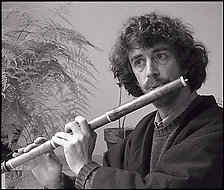
In 2017, I realized that at least two arias Bach wrote for this Sunday make me cry, not because of the singers, but because of the instrumental solos that accompany those arias. Read it here, in a post that introduces Cantata 114 Ach, lieben Christen, seid getrost. At that time, the best recording I could find was a live radio registration of a performance led by Gustav Leonhardt in 1988. All this because of the tenor aria.* I knew who the tenor was (John Elwes), but could only make an educated guess about the extraordinary flute player, probably Marc Hantaï. That recording also had my first countertenor love, Gérard Lesne, singing the alto aria.

David Erler. Photo by Björn Kowalewsky

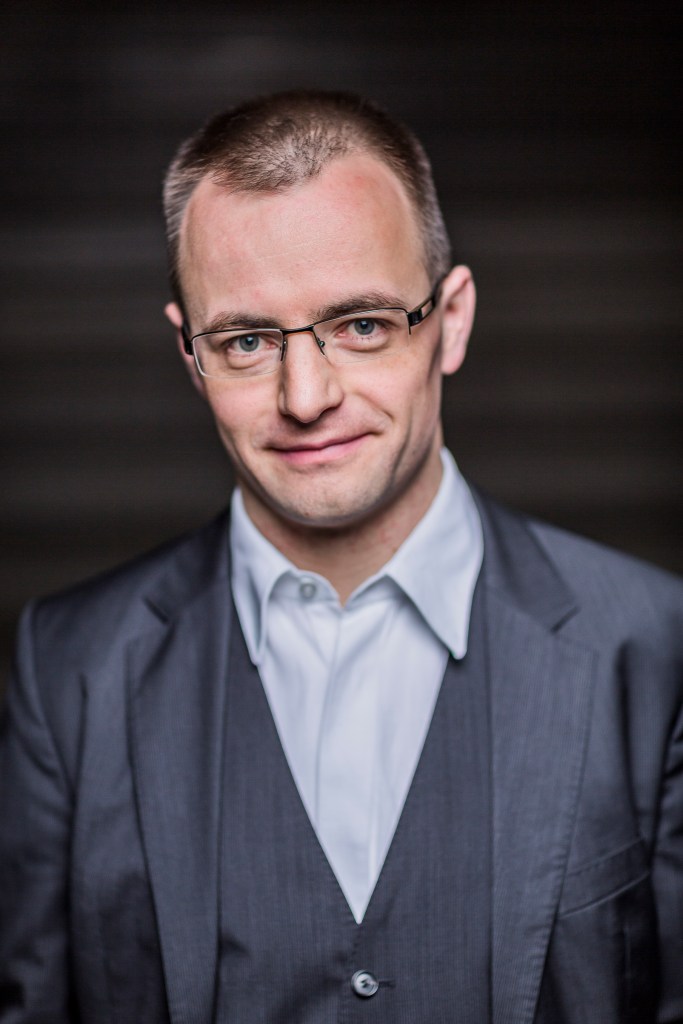
At the last gathering of the Berkeley Bach Cantata Group I attended before the Shelter In Place started (and all rehearsals and performances stopped) here in the SF Bay Area, I got to discuss Bach’s “Pisendel style” violin solos a bit with the first violinist of that group. In an email-exchange that followed, he pointed out a countertenor he liked, but who I had never heard of before: David Erler.

Then this week, while checking if any new recordings of cantatas 148 or 114 had come out since I wrote those blog posts, I discovered to my great delight that in September 2018 the J.S. Bach Foundation recorded Cantata 114 Ach, lieben Christen, seid getrost with … Marc Hantaï playing flute in the tenor aria! (I now for sure know it was him in that 1988 Leonhardt recording) and … David Erler singing the alto aria (and doing an excellent job). While it doesn’t rival the energy of the soprano solo on the Gardiner recording (for this, please read my blog post from 2017 about this cantata), nor Peter Kooij’s solo on the Leonhardt recording, it is a fabulous and very moving performance, and you can see Marc Hantaï play. Find this live video recording by the J.S. Bach foundation here on YouTube. Soloists are: David Erler, alto; Georg Poplutz, tenor; and Wolf-Matthias Friedrich, bass.

Find the German texts with English translations of Cantata 114 here, and the score here.

©Wieneke Gorter, October 4, 2020.

Read more:

In 2018, I realized that Bach reworked the incredibly moving tenor aria with flute from Cantata 114 into a faster tenor aria with oboe for Cantata 124, and that nobody else seemed to have noticed this yet. Read that here.

Read more about my first countertenor loves here.

Maria Keohane brings Peace

20 Sunday Sep 2020

Posted by cantatasonmymind in Cantatas, Leipzig, Trinity

≈ 2 Comments

Tags

BWV 110, BWV 151, BWV 51, Dresden, Emma Kirkby, European Union Baroque Orchestra, John Eliot Gardiner, Jos van Veldhoven, Lars Ulrik Mortensen, Maria Keohane, Robert Vanryne, Sebastian Philpott, Trinity 15, Weissenfels

One of the three cantatas Bach wrote for this 15th Sunday after Trinity is Cantata 51 Jauchzet Gott in allen Landen!, the famous solo-cantata for soprano and trumpet. In a world that values athletes above artists, attending or discussing a performance of this cantata can sometimes feel as if we’re all judging a tennis match instead of a work of art: will the soprano hit that high C? and how virtuoso is that trumpet player? I have always been a bit frustrated by this.

What a breath of fresh air it was then to discover Maria Keohane’s interpretation of this cantata. There are two live registrations of her singing this on YouTube, one with the European Union Baroque Orchestra, under the direction of Lars Ulrik Mortensen, with Sebastian Philpott on trumpet. Then there is a newer one, from 2015, with the Netherlands Bach Society under the direction of Jos van Veldhoven, with Robert Vanryne on trumpet. That one is my favorite, and you can find it here.

Find the German texts with English translations here (click on “Text”), and the score here.

I noticed how Maria Keohane masters every aspect of this composition, not because she’s the most virtuoso soprano on earth, but because she completely understands the music. She radiates joy, but also brings a great Calm over everything and everyone. In this wonderful interview (with English subtitles here, with Dutch subtitles here) she explains how this cantata has been with her all her music-making life, how she sees her interaction with the trumpet as a symbiosis instead of a competition, and how she believes that “in allen Landen” (in all lands) means that we share the same joy of being together on this earth.

I realize she was in Christmas mode when she gave this interview (the cantata was performed in the same concert as Cantata 110 for Christmas Day and Cantata 151 for the Third Christmas Day), but I absolutely feel the “Peace on Earth” she talks about when I listen to her performance.

Some more information about this cantata:

While almost all soprano solos in Bach’s church cantatas were intended for a boy soprano (no female musicians allowed in the churches of Leipzig), it remains a big question whether this one was ever sung by a boy. Under the “Story” tab on this website, the Netherlands Bach Society explains that Bach composed this cantata around 1730 for either the Weissenfels court (where his wife Anna Magdalena, an accomplished singer who had family there, might have performed it) or for one of the Italian opera singers who settled in Dresden that year. Even Gustav Leonhardt chose an adult female soprano (Marianne Kweksilber) for his recording of this cantata.

If you’d like to hear the perfect “boy soprano voice” sing this cantata, I invite you to listen to Emma Kirkby on the Gardiner recording from 2000, here on Spotify, or here on YouTube. While she doesn’t move me the way Maria Keohane does, her voice is an unbelievably amazing instrument.

Other cantatas for this 15th Sunday after Trinity I’ve discussed in past years: Cantata 138 from 1723, and Cantata 99 from 1724.

Wieneke Gorter, September 19, 2020.

Third Sunday of Advent

14 Saturday Dec 2019

Posted by cantatasonmymind in Advent, Bach's life, Cantatas, Leipzig, Weimar

≈ Leave a comment

Tags

Advent 3, BWV 186a, English Baroque Soloists, John Eliot Gardiner, Katherine Fuge, Richard Wyn Roberts

To find the Weekly Cantata Advent Calendar, please click here.

As I mentioned last week, when Bach worked in Weimar, he wrote a cantata for each of the 4 Sundays in Advent. For Sunday December 13, 1716, the third Sunday of Advent, he wrote the one listed in the BWV catalog as Cantata 186a, Ärgre dich, o Seele, nicht. No original music score is left of this cantata. However, thanks to Bach’s librettist, Weimar court poet Salomo Franck, who published the full libretto for this cantata in a poetry volume in 1717, we do have the original text of 186a.

And, it is not hard to make an educated guess as to what the music would have been. Read all about it in my blog post from 2016 and 2017.

To listen to a beautiful soprano/alto duet that appeared for sure in the Weimar and the Leipzig versions of this cantata, click here. Katharine Fuge, soprano, and Richard Wyn Roberts, alto, with the English Baroque Soloists, John Eliot Gardiner (Live recording. Ansbach, 2000).

Wieneke Gorter, December 11, 2019.

To find the Weekly Cantata Advent Calendar, please click here.

Ascension Day 1725

13 Sunday May 2018

Posted by cantatasonmymind in After Easter, Cantatas, Chorale cantatas 1724/1725, Leipzig

≈ Leave a comment

Tags

Ascension, Christiane Mariane von Ziegler, Christoph Genz, Friedemann Immer, Harnoncourt, John Eliot Gardiner, Kurt Equiluz, Max van Egmond, Reinhard Hagen, René Jacobs, Robin Blaze

giotto_ascension

The Ascension of Our Lord by Giotto di Bondone, 1305. Fresco in the Capella Scrovegni, Padua, Italy.

In the Netherlands, where I grew up, most people have a four-day weekend for Ascension Day (Thursday May 10 this year as well as in 1725). The traditional thing to do was go for a long bike ride very early in the morning on the Thursday, and then spend the rest of the weekend doing the first serious gardening of the season, putting annuals in the ground, filling window boxes, etc.

Here in the United States, Ascension Day goes by unnoticed, nobody gets that Thursday day off, let alone a four-day weekend. And here in California we already started gardening a while ago. So, while still digging out from an extremely busy several weeks/months, I forgot about it. I only remembered when my sister, who lives in France, told me they were away for the long weekend.

Following Bach’s writing in 1725, the cantata for Ascension Day 1725 is Cantata 128 Auf Christi Himmelfahrt allein. It has a fantastic bass solo with trumpet (the designated instrument to illustrate “heaven”) and a beautiful alto-tenor duet.

My favorite recording of this cantata is from 1993 by Gardiner, with Robin Blaze, countertenor; Christoph Genz, tenor; and Reinhard Hagen, bass. Unfortunately the name of the trumpet player is not published. Listen to it here on Spotify. Unfortunately this recording is not on YouTube. Please note that this is a completely different interpretation than Gardiner’s crazy high tempo recording from 2012 (a “make-up” recording for the missing one from the Cantata Pilgrimage cycle from 2000).

If you don’t have access to Spotify, you can listen to Harnoncourt’s 1983 recording here on YouTube, with soloists René Jacobs, coutertenor; Kurt Equiluz, tenor; Max van Egmond, bass; and Friedemann Immer, natural trumpet.

Find the text of Cantata 128 Auf Christi Himmelfahrt allein here, and the score here.

While the opening chorus is very similar to the great chorale fantasias from January 1725, this cantata is not a true “chorale cantata” anymore. By this time, after Easter 1725, Bach doesn’t follow the same structure that he religiously adhered to for all his cantatas from Trinity, June 11, 1724 to the Annunciation, March 25, 1725. None of the cantatas after March 25 have the chorale tune or text throughout the entire cantata: the closing chorale is a different one than the chorale in the opening chorus, and the inner recitatives and arias are no longer based on the text of the chorale from the opening chorus either.

This cantata is the fourth in the series of nine consecutive cantatas on poetry by Christiana Mariana von Ziegler (103, 108, 87, 128, 183, 74, 68, 175, and 176). Because Von Ziegler’s texts were published, we can see how many changes Bach made to her texts. In the case of this cantata, the most striking change is Bach deleting the planned recitative between the bass aria and the alto-tenor duet. It seems that Bach wanted to increase the musical contrast between the two movements, while at the same time clarifying the connection of the text from one movement (bass aria) to the next (alto-tenor) duet.

Thus he adds Von Ziegler’s original recitative text to the text of the bass aria, starting with an extra line “wo mein Erlöser lebt.” The line doesn’t rhyme with anything, and Von Ziegler must not have been happy with this. However, this way Bach can repeat the instrumental opening of the aria after what was originally the recitative text, and create more contrast between the movements.

He also adds two more lines at the end of that bass aria:

So schweig, verwegner Mund,
Und suche nicht dieselbe zu ergründen!

Thus making it more clear how the text of this movement is related to the next movement.

Below is an overview of all the changes Bach made in this particular libretto, courtesy of Eduard van Hengel.

Wieneke Gorter, May 13, 2018, links updated May 19, 2024.

text comparison
BACH1. Auf Christi Himmelfahrt allein
Ich meine Nachfahrt gründe
Und allen Zweifel, Angst und Pein
Hiermit stets überwinde;
Denn weil das Haupt im Himmel ist,
Wird seine Glieder Jesus Christ
Zu rechter Zeit nachholen.

2. Ich bin bereit, komm, hole mich!
Hier in der Welt
Ist Jammer, Angst und Pein;
Hingegen dort, in Salems Zelt,
Werd ich verkläret sein.
Da seh ich Gott
von Angesicht zu Angesicht,
Wie mir sein heilig Wort verspricht.

3. Auf, auf, mit hellem Schall
Verkündigt überall:
Mein Jesus sitzt zur Rechten!
Wer sucht mich anzufechten?
Ist er von mir genommen,
Ich werd einst dahin kommen,
Wo mein Erlöser lebt.
Mein Augen werden ihn
in größter Klarheit schauen.
O könnt ich im voraus
mir eine Hütte bauen!
Wohin? Vergebner Wunsch!
Er wohnet nicht auf Berg und Tal,
Sein Allmacht zeigt sich überall;
So schweig, verwegner Mund,
Und suche nicht dieselbe zu ergründen!

4. Sein Allmacht zu ergründen,
Wird sich kein Mensche finden,
Mein Mund verstummt und schweigt.
Ich sehe durch die Sterne,
Dass er sich schon von ferne
Zur Rechten Gottes zeigt.

5. Alsdenn so wirst du mich
Zu deiner Rechten stellen
Und mir als deinem Kind
Ein gnädig Urteil fällen,
Mich bringen zu der Lust,
Wo deine Herrlichkeit
Ich werde schauen an
In alle Ewigkeit.

Christiana Mariana von Ziegler1. Auf Christi Himmelfarth allein
ich meine Nachfarth gründe
und allen Zweifel, Angst und Pein,
hiermit stets überwinde:
Denn weil das Haupt im Himmel ist,
wird seine Glieder JEsus Christ
zu rechter Zeit nachhohlen.

2. Ich bin bereit, komm hohle mich.
Hier in der Welt
Ist nicht, als Jammer, Angst und Pein;
Hingegen dort in Salems Zelt
Wird ich verklähret seyn.
Da seh ich dich
von Angesicht,
Wie mir dein heilges Wort verspricht.

3. Auf! Jubiliert mit hellen Schall,
Verkündiget nun überall,
Mein JEsus sitzt zur Rechten,
Wer sucht mich anzufechten?
Wird er mir gleich weggenommen,
Wird ich doch dahin auch kommen.
………………………………………..
Mein Auge wird ihn einst
in gröster Klarheit schauen.
O! könt ich schon allda
mir eine Hütte bauen;
Jedoch vergebner Wunsch,
Er wohnet nicht auf Berg und Thal.
Sein Allmacht zeigt sich überall.
………………………………………………..
………………………………………………….

4. Dein Allmacht zu ergründen,
Wird sich kein Mensche finden,
Mein Mund verstummt und schweigt
Ich sehe durch die Sterne,
daß er sich schon von ferne
Zur Rechten seines Vaters zeigt.

5. Alsdenn so wirst du mich
zu deiner Rechten stellen,
und mir als deinen Kind
ein gnädig Urtheil fällen,
mich bringen zu der Lust,
wo deine Herrlichkeit
ich werde schauen an
in alle Ewigkeit.

Third Sunday after Easter, 1725

22 Sunday Apr 2018

Posted by cantatasonmymind in After Easter, Cantatas, Leipzig

≈ Leave a comment

Tags

3rd Sunday after Easter, Bach, BWV 1, BWV 103, BWV 12, BWV 96, Christiane Mariana von Ziegler, Damien Guillon, Easter, flauto piccolo, Il Gardellino, John Eliot Gardiner, Marcel Ponseele, Mark Padmore, Philippe Herreweghe, Robin Blaze, sopranino recorder

christ_taking_leave_of_the_apostles
Christ Taking Leave of the Apostles by Duccio di Buoninsegna, between 1308 and 1311. Tempera on wood. Museo dell’Opera del Duomo, Siena, Italy.

2020 update:  If you can afford to financially support the artists, please consider purchasing your favorite recording. Just click on the Amazon or iTunes link at the end of the paragraph that describes the recording.

In 1725, between Easter and Pentecost, Bach set nine cantatas in a row to beautiful poetry by Christiane Mariana von Ziegler: Cantatas 103, 108, 87, 128, 183, 74, 68, 175, and 176. Read more about this multi-talented female librettist, arts benefactor, and fellow Lutheran “preacher” in this post.

The first cantata in this series is Cantata 103: Ihr werdet weinen und heulen, for the third Sunday after Easter in 1725.

My favorite overall recording of this cantata is by Herreweghe, with vocal soloists Damien Guillon, Thomas Hobbs, and Peter Kooij, and Jan Van Hoecke on flauto piccolo. Listen to their opening chorus here on YouTube. Listen to the entire recording by Herreweghe here on Spotify. If you like this recording, please purchase it on Amazon or iTunes.

However for the best energy and intensity in the tenor aria, I prefer Mark Padmore on the Gardiner recording. Listen to their interpretation of the tenor aria here on Spotify. If you like this recording, please purchase it on Amazon or iTunes.

Robin Blaze’s singing and Dan Laurin’s playing in the alto aria on the Bach Collegium Japan recording is exceptional, and perhaps more moving than Damien Guillon’s on the Herreweghe recording. Listen to that aria here on Spotify. And it is a good problem for me, not being able to choose between countertenors 🙂 If you like this recording, please purchase it on Amazon or iTunes.

Find the texts & translations here, and the score here.

Two noteworthy things about this cantata are the dramatic change from sadness to joy, and the use of the sopranino recorder, or “flauto piccolo” in the opening chorus and the alto aria.

The sadness on this “Jubilate” Sunday is because of the Gospel story for this Sunday: Jesus announces to his disciples that he is going to leave them, and that they will go through a period of hardship during which the rest of the world will mock them. Other cantatas Bach wrote for this Sunday are Cantata 12 Weinen, Klagen, Sorgen, Zagen and Cantata 146 Wir müssen durch viel Trübsal. But in the alto recitative (fourth movement), the turning point is announced: “dass meine Traurigkeit in Freude soll verkehret werden” (that my sorrow will be turned to joy). Bach makes a big deal here of illustrating the word “Freude” and then does that again, even more exuberantly in the tenor aria that follows: there the illustration of the word “Freude” is six measures and almost 100 notes long.

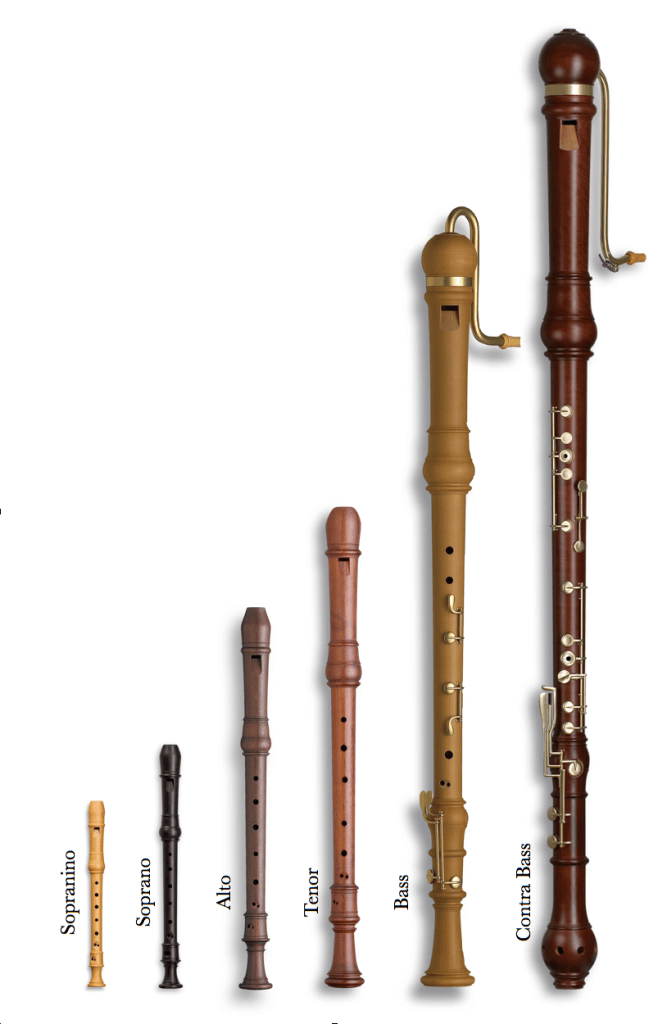
Since his arrival in Leipzig, Bach had used recorders in cantatas quite often see this image by Nik Tarasov, but this is only the third time he writes for sopranino recorder, or “flauto piccolo.” The first time was on October 8, 1724, in Cantata 96 Herr Christ der einige Gottessohn, and the second time on March 25, 1725, in Cantata 1 Wie schön leuchtet der Morgenstern.

In both cases, Bach used the sopranino part to illustrate the word “Morgenstern” (Morning Star) in the text, creating an extra constellation over the highest notes of the sopranos with the even higher notes of the recorder. It is not completely clear why Bach uses the sopranino this time, in Cantata 103. There are theories that the instrument is meant to illustrate the “mocking” of the outside world. But, as Bach always paints the entire story of a cantata already in the opening chorus, I think he perhaps might have used the recorder to convey the message of “there will be joy at the end” in the otherwise very sad opening chorus. But who knows, his reason for using the instrument might simply have been that the virtuoso player was in town again, since it was around the time of the big Easter Trade Fair that Bach was writing this music.

Whatever the reason, it is very likely that there was only one person in 1725 among Bach’s colleagues who could play this. When Bach performed the piece again in later years, he changed the accompanying instrument in the alto aria to violin. There are also parts for a transverse flute. Herreweghe, Koopman, and Suzuki use a sopranino recorder in the alto aria, while Gardiner uses violin, and Ponseele (on the Il Gardellino recording) uses transverse flute.

To learn more about this cantata, you can now (2020) watch the excellent introduction (“Workshop”) by Rudolf Lutz of the J.S. Bach Foundation here on YouTube. The J.S. Bach Foundation just added English subtitles this video, so it is now also accessible to those who don’t understand German.

To read more about Bach’s use of recorders, I recommend this article in two parts by Nik Tarasov: Part I, about Bach in Mühlhausen, Weimar, and Köthen, and Part II, about Bach in Leipzig.

Wieneke Gorter, April 22, 2018, updated April 27 & May 2, 2020.

Passion stress for Bach plus two more cantata movements disguised as organ works

05 Monday Mar 2018

Posted by cantatasonmymind in Bach's life, Cantatas, Chorale cantatas 1724/1725, Leipzig

≈ Leave a comment

Tags

Amsterdam Baroque Choir, Amsterdam Baroque Orchestra, Bach, Bine Katrine Bryndorf, Bogna Bartosz, Copenhagen, Garnisons Kirke, Grote Kerk Leeuwarden, Jörg Dürmüller, John Eliot Gardiner, Leeuwarden, Leipzig, Margaret Faultless, Schübler, St. John Passion, St. Matthew Passion, St. Thomas Church, Ton Koopman

Bach_house_Leipzig

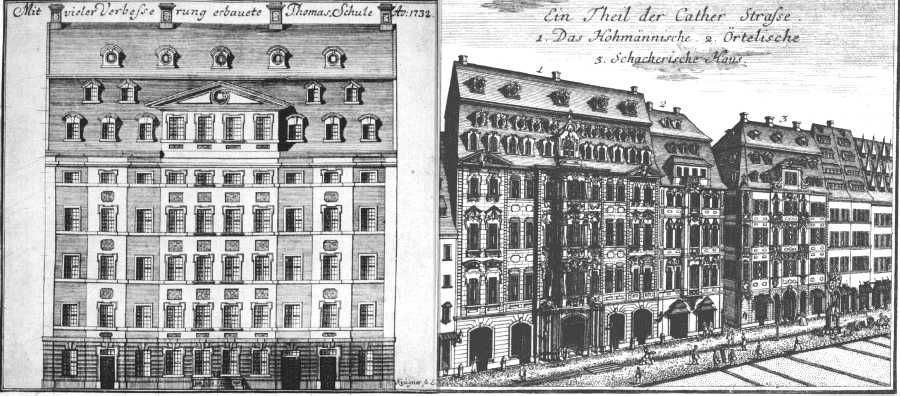
On the left the rebuilt Thomas School Anno 1732. The apartment of the Bach family was on the left of the building. On the right is “a part of the Cather(ine) Street”. Zimmermann’s Café which hosted Bach’s Collegium Musicum was located in the center building labeled “2”.

Around this time in 1725, Bach was still on a break from writing cantatas (they were not to be performed in Leipzig during the 40 days before Easter), but was by no means resting. On the contrary, he was likely rather stressed out about his passion music for Good Friday 1725.

We know that on Good Friday 1725, Bach performed a revised version of his St. John Passion from 1724. We don’t know why he revised it, and some scholars such as John Elliot Gardiner even suggest that Bach had been planning to perform a St. Matthew Passion instead.*

If we could only travel back in time and find out what happened. If it was indeed Bach’s plan to perform a completely new composition, why did he not perform it until 1727? Did he simply run out of time, or did the Leipzig city council not approve of the piece? And why exactly did he revise the St. John Passion? Did he want to change it himself, or had the presentation of Jesus as victor** in the original 1724 version irked the city council?

Now for some music, related to my previous blog post, but completely unrelated to the passion stress story above:

Following up on my post from two weeks ago, there are two more cantata movements that show up in Bach’s “Schübler” organ chorales:

The fifth movement of Cantata 10 Meine Seele erhebt den Herren (live performance in the St. Thomas Church in Leipzig by alto Bogna Bartosz, tenor Jörg Dürmüller, and the Amsterdam Baroque Orchestra under the direction of Ton Koopman) disguised as organ chorale BWV 648 (Ton Koopman on the historic Müller organ (1724) of the Grote Kerk in Leeuwarden, The Netherlands) with the same title. Click on the links to watch and listen on YouTube.

Also: the second movement of Cantata 137 Lobe den Herren, den mächtigen König der Ehren from 1725 (violinist Margaret Faultless with all the altos of the Amsterdam Baroque Choir under the direction of Ton Koopman), transformed into organ chorale BWV 650 Kommst du nun, Jesu, vom Himmel herunter (Bine Katrine Bryndorf on the historic organ (1724) of the Garnisons Kirke in Copenhagen, Denmark). Click on the links to listen on YouTube.

Wieneke Gorter, March 5, 2018

*In his book Music in the Castle of Heaven, John Elliot Gardiner makes a strong case that Bach might have initially planned to have the St. Matthew Passion ready for Good Friday 1725. Read this blog post to find out why that is not an unlikely scenario at all.

**Read more about this in this blog post

← Older posts

Recent Posts

  • “Missa Miniatura” by CONTINUUM/Elina Albach Even More Moving in 2025
  • Bachfest Leipzig 2025
  • Bach Cantatas for Christmas – 1724 and 1734 editions
  • Fourth Sunday of Advent – more insight into Cantata 62 helped me better understand Bach’s Christmas Oratorio
  • Saint Ambrose and Luther in Milan – Second Sunday of Advent

Archives

  • August 2025
  • July 2025
  • December 2024
  • November 2024
  • June 2024
  • January 2024
  • December 2023
  • October 2023
  • September 2023
  • August 2023
  • April 2022
  • February 2022
  • January 2022
  • December 2021
  • November 2021
  • June 2021
  • May 2021
  • April 2021
  • February 2021
  • January 2021
  • December 2020
  • November 2020
  • October 2020
  • September 2020
  • August 2020
  • July 2020
  • May 2020
  • April 2020
  • March 2020
  • February 2020
  • January 2020
  • December 2019
  • November 2019
  • May 2018
  • April 2018
  • March 2018
  • February 2018
  • January 2018
  • December 2017
  • November 2017
  • October 2017
  • September 2017
  • August 2017
  • July 2017
  • June 2017
  • May 2017
  • April 2017
  • March 2017
  • February 2017
  • January 2017
  • December 2016
  • November 2016
  • October 2016
  • September 2016
  • August 2016
  • July 2016
  • June 2016
  • May 2016
  • April 2016
  • March 2016
  • February 2016
  • January 2016

Enter your email address to follow this blog and receive notifications of new posts by email.

Join 338 other subscribers

Categories

  • 1723 Trinity season special series
  • Advent
  • After Easter
  • Ascension
  • Bach's life
  • Cantatas
  • Chorale cantatas 1724/1725
  • Christmas
  • Easter
  • Epiphany
  • Following Bach in 1725
  • Köthen
  • Leipzig
  • Septuagesima
  • Travel
  • Trinity
  • Weimar

Meta

  • Create account
  • Log in
  • Entries feed
  • Comments feed
  • WordPress.com

Website Built with WordPress.com.

  • Subscribe Subscribed
    • Weekly Cantata
    • Join 158 other subscribers
    • Already have a WordPress.com account? Log in now.
    • Weekly Cantata
    • Subscribe Subscribed
    • Sign up
    • Log in
    • Report this content
    • View site in Reader
    • Manage subscriptions
    • Collapse this bar
 

Loading Comments...