Weekly Cantata

Weekly Cantata

Tag Archives: Philippe Herreweghe

Bachfest Leipzig 2025

09 Wednesday Jul 2025

Posted by cantatasonmymind in Cantatas, Leipzig, Travel

≈ Leave a comment

Tags

Adina Apartment Hotel Leipzig, Alex Potter, Anna-Sylvia Goldammer, Apartmenthotel Quartier M., Bach, Bach Akademie Stuttgart, Bach-Archiv Leipzig, Bachakademie Stuttgart, Bachfest 2025, Bachfest 2026, Bachfest Leipzig, Bachfest Leipzig 2025, Bachfest Leipzig 2026, Bachfest Malaysia, Bachstiftung, BWV 198, BWV 20, BWV 233, BWV 79, Christiane Mariana von Ziegler, Christiane Mariane von Ziegler, Collegium Vocale Gent, Continuum Berlin, David Chin, David de Winter, Elina Albach, Gardiner, Hans-Christoph Rademann, Heinrich Schütz, Innside Leipzig, J.S. Bach Foundation, J.S. Bach Stiftung, Johann Hermann Schein, johann-sebastian-bach, Koopman, linden trees, Maria Küstner, Merseburg, Merseburger Dom, Michael Maul, Miriam Feuersinger, Motel One Leipzig, Nikolaikirche, Patrick Grahl, Philippe Herreweghe, Rick Fulkner, Romanus-Haus, Rudolf Lutz, Schütz, Schein, Solomon's Knot, Thomaskirche, Tobias Berndt, Tomáš Král, Wir glauben all an einen Gott
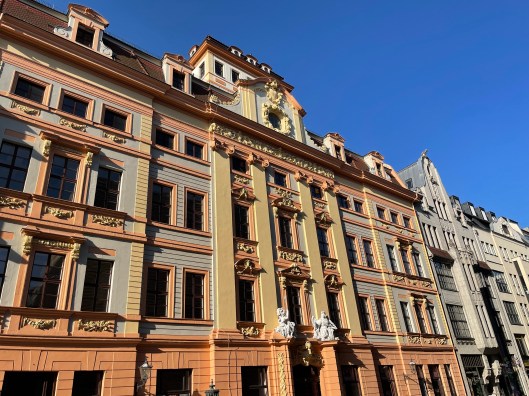
Romanus-Haus in Leipzig, the house where poet Christiane Mariane von Ziegler held salons in the 1720s and 1730s.

I visited Bachfest Leipzig again this year, from Tuesday evening, June 17, through Sunday, June 22, attending eight concerts in six days. Read my highlights below, and please subscribe to this blog so you don’t miss future posts. I joined a festival trip to Merseburg, took walks, caught up with friends from all over the world, and met some new fellow Bach lovers. For me, the camaraderie has almost become a more important reason to return each year than the concerts.

That said, next year’s cantata programming is not to be missed, with Herreweghe AND Lutz AND Rademann, so if you would like to attend you should probably get organized – my tips for that at the end of this post.

Summer in Leipzig

June is the perfect time of year in this city. People are out on café terraces everywhere, and walking in the streets. Then there’s the summer green: entire rose bushes for sale on the street in the middle of the center, and linden trees in bloom wherever you go. The scent of linden delights me, and I learned something new about them this year, thanks to our Bachfest tour guide Anna-Sylvia Goldammer on the organ trip to Merseburg: Leipzig has apparently always been full of linden trees! The latin word for Leipzig, Lipsi, was derived from the Slavic word for linden tree, lipa. Most of downtown, inside the ring, is car-free, with only taxis and necessary vehicles allowed in. This makes it feel safe and, dare I say it, more walkable than Amsterdam.

The free performances can be the most meaningful

Inspired by a seatmate on the trip to Köthen last year, I attended more of the free or almost-free performances this year. You can still fully enjoy the camaraderie with other Bach fans and hear beautiful music without spending a fortune. There are no assigned seats for the church services, so as long as you line up early, you can enjoy the best view for free.

This year I had missed the free performances on the market square, but on Saturday morning, June 21, I was so lucky to attend an unforgettable, absolutely exquisite rendition of the duet from Cantata 79 Gott der Herr ist Sonn und Schild by soprano Miriam Feuersinger and baritone Tobias Berndt during the “Mette” (morning service) in the Nikolaikirche. The Sunday morning service in the Thomaskirche was special too. The service was a reconstruction of what a church service in Bach’s time would have been like (I could write an entire blog post about that!), I got to hear Johannes Lang play the organ, Tomáš Král sing the bass arias in Cantata 20 O Ewigkeit, du Donnerwort, and tenor Patrick Grahl sing not only the tenor aria in that cantata but also the cantor-bits in the service as well as the reading from the New Testament (yes this was sung, beautiful!). But I also happened to sit and sing (in the congregational singing) next to the 80-year-old father of choir director Maria Küstner. With great determination he had climbed all the stairs to the balcony, even though he was walking with a cane. When after the service I thanked him for his clear and confident singing, he told me that decades ago, on frequent car trips between Leipzig and Berlin, he would sing Luther’s “Wir glauben all an einen Gott” (one of the Lutheran chorales we had just sung in the service) to keep himself and the family awake. I forgot to ask him if this was still during GDR time, but it might very well have been.

Catching up with David Chin

This year I also finally had the opportunity to have lunch with David Chin, director of Bachfest Malaysia and creator of the excellent documentary Encountering Bach which I have referenced already a few times on this blog. We started conversations on Facebook during the Covid pandemic after David published his first episodes of the documentary, then met in person at the Thüringer Bachwochen in 2022, but only managed to say a few quick hellos at last year’s Bachfest. So grateful it worked out to talk this year!

Concert highlights: Alex Potter and David de Winter
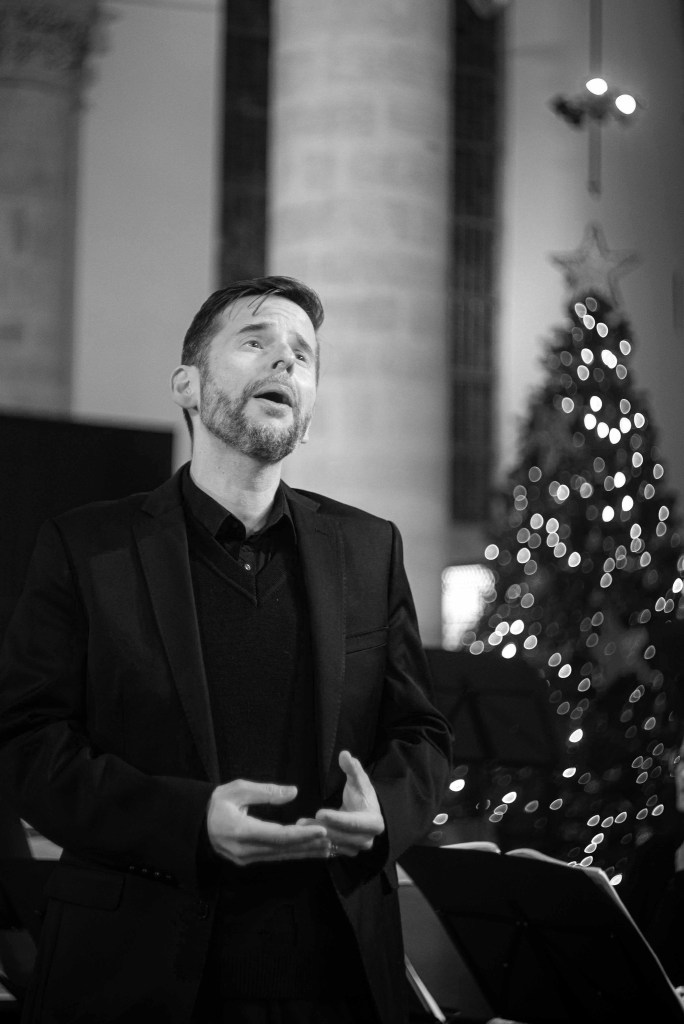
Alex Potter in the Nikolaikirche on June 17. Photo courtesy of Sascha Wolff.

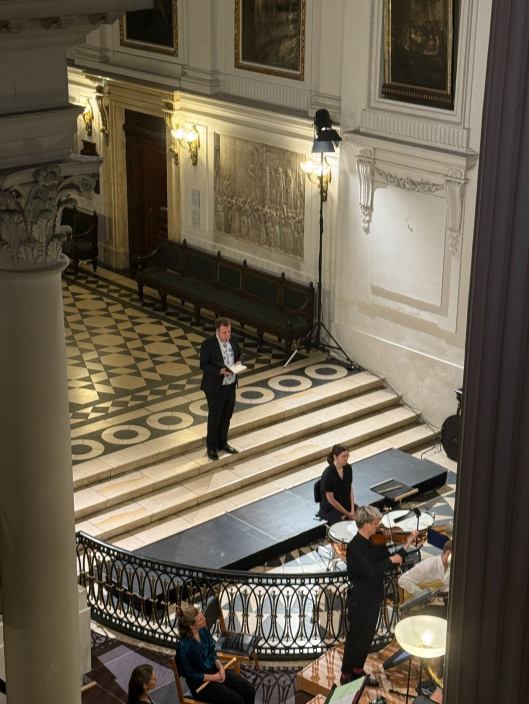
I had only just arrived to Leipzig on Tuesday June 17. I had not even unpacked yet, but I had a chance to hear “Missa Miniatura,” Elina Albach’s adaptation of Bach’s Mass in B Minor again, and I am a big fan of that production. So I ate a quick dinner and made it to the Nikolaikirche just in time. Alex Potter’s stunning rendition of the Agnus Dei at this concert was definitely a highlight of this Bachfest for me. In order to have a bit more acoustic, he had climbed up a few steps so he stood directly under an arch in the Nikolaikirche. Thanks to Sascha Wolff for capturing that moment on photo. After this aria I felt “we can now all die happily.” The other aria that transported me to a similar state of bliss was David de Winter’s “Der Ewigkeit saphirnes Haus” from Cantata 198 Laß, Fürstin, laß noch einen Strahl with Solomon’s Knot on Friday, June 20, in the Evangelisch-Reformierte Kirche. I had never heard this aria sung so beautifully.

Bach’s “50 best cantatas” by Lutz, Herrewege, and Rademann, Vox Luminis, Koopman, and Gardiner in 2026 – how to get organized

Disclaimer: I’m not getting paid to write this. Below is a reflection of my personal opinion and personal interpretation of the information that is available at the time of writing this blog post. I do not accept responsibility if your experience is different. I just thought it might be helpful to curate the information from various websites for you.

Anyone reading this who has visited Bachfest in the last few years: please feel free to add your own advice in the comments. Thank you!

Next year’s cantata programming at the festival is going to be a hit parade of the “50 best cantatas” (chosen by the audience, read more about the how and why in this interview with festival director Michael Maul by blogger Rick Fulkner) with two concerts each by Herreweghe, Lutz, Koopman, Gardiner, Rademann, and Vox Luminis. Here are my tips to get organized:

If you already know you want to attend all 12 cantata concerts (= two concerts per day, six days in a row, of two to three cantatas each, each cantata preceded by a motet by Schütz or Schein), you can purchase your “packet” here. You’ll go through two seat selection screens, one to select your seat for the Thomaskirche (the screen doesn’t specify this, but it is the seatmap that has the stage at the bottom, and “Südempore” on the right), and, once you have clicked the checkout button, another one for the Nikolaikirche (not specified either, but this is the map that has the stage at the top and 1. Empore and 2. Empore).

Please note for Thomaskirche:

  • For concerts with choir and orchestra, the performers are located on the organ loft of the Sauer-organ (the bottom of the seating map).
  • The majority of the pews downstairs, where the sound is likely best, have their backs to the performers. Many people don’t mind this, but it surprised me. Thus, if it is important for you to see the performers, choose a premium seat (yellow on the map) on one of the balconies, where the sound is wonderful too.
  • Some seats on the Empore (balconies) have partially blocked views of the performers due to large pillars, even the premium seats are not all equal, so don’t get your hopes up too much.

Please note for Nikolaikirche:

The sound is good everywhere in the church, but most seats on the balconies have limited leg space, so keep that in mind if you are tall, since these cantata concerts will be pretty long. The Bach Museum shop sells cute portable cushions for making your church pew seat more comfortable, see picture on the left, pillow folded in half. I also saw people who traveled with inflatable pillows.

If you want to pick and choose, only want to go to one concert per day, or don’t want to commit to spending a thousand euros just yet, mark your calendar:

  • November 11, 2025: Advance sales start for Patrons of the Bachfest/Bach-Archiv Leipzig and for members of the Neue Bachgesellschaft.
    • Become a patron of the Bachfest here (access to VIP seating for three concerts or more, depending on level of giving).
    • Become a member of the Neue Bachgesellschaft here (no special seating, just the earlier access to ticket sales).
  • November 25, 2025: Regular ticket sales start.

Where to stay: People I met had good experiences at Innside (hotel directly across the ring from the Thomaskirche, in a nice neighborhood), Motel One (close to the Nikolaikirche), and Adina Apartment Hotel (apartments close to the Nikolaikirche, 24-hour reception, pool, restaurant, bar). I myself stayed in Apartmenthotel Quartier M. which I loved because of the excellent organic supermarket on the ground floor of the same building, the good price, and the short walking distance to the Thomaskirche.

Copyright Wieneke Gorter, July 9, 2025.

Bach Cantatas for Christmas – 1724 and 1734 editions

23 Monday Dec 2024

Posted by cantatasonmymind in Cantatas, Chorale cantatas 1724/1725, Christmas, Epiphany, Leipzig

≈ 4 Comments

Tags

Alex Potter, Antonia Frey, baroque-music, Bart Aerbeydt, Bernhard Bechtold, Carine Tinney, Charles Daniels, Christmas, Christmas Oratorio, Collegium Vocale Gent, Concerto Copenhagen, Daniel Johannsen, Eric Milnes, Florian Sievers, Harry van der Kamp, J.S. Bach Foundation, J.S. Bach Stiftung, Jan Kobow, Julia Doyle, Lars Ulrik Mortensen, Lucia Giraudo, Margot Oitzinger, Maria Keohane, Mark Padmore, Matthew Brook, Matthew White, Milo Maestri, Monika Mauch, Montreal Baroque, Netherlands Bach Society, Peter Kooij, Philippe Herreweghe, Rodrigo Lopez-Paz, Rudolf Lutz, Sarah Connolly, Stephan MacLeod, Tomáš Král, Vasiljka Jezovsek

Merry Christmas! Below are my recommendations for recordings of Bach’s chorale cantatas for the Christmas season, written in 1724/1725, as well as a link to the video of this year’s wonderful live performance by the Netherlands Bach Society of Bach’s Christmas Oratorio, written in 1734/1735. Before I get to that, I wanted to share a personal story. (If you want to “jump to the recipe,” just scroll down three paragraphs to the next header).

As regular readers of this blog know, Christmas morning for me = “Jauchtzet, frohlocket,” the first entrance of Bach’s Christmas Oratorio*. But ten days ago, during the first-ever Christmas Oratorio concert of my life as a chorus member, I couldn’t sing those words.

I had unwittingly set myself up for it, because I had just done two things to remember my late mother. It was very cold in the church, and I had lent one of my mother’s scarves to a friend who was singing next to me. As we were getting on stage, I told her: “this scarf has been in many a Bach concert, because my mother used to sing in a Bach choir too.” And then I showed her how I had copied my mother’s signature from her old piano reduction to the new one I was using now.

So while I had been completely fine during all the rehearsals, now with the audience there and those memories, the first notes of the timpani made me choke up. Fortunately, that first soprano entrance is low and doubled by many other voices, so nobody noticed. And I was fine for the rest of the concert, and thoroughly enjoyed getting to sing cantatas 1, 2, 5, and 6 of Bach’s Christmas Oratorio with a good orchestra and great soloists.

Do you have special memories associated with Bach’s or other Christmas music? Please let me know in the comments. Here are my recommendations for recordings:

Christmas Cantatas from Bach’s Chorale Cantata cycle, 1724/1725

Christmas Day: Cantata 91 Gelobet seist du, Jesu Christ by the J.S. Bach Foundation/Rudolf Lutz, with Monika Mauch – Soprano; Margot Oitzinger – Alto; Bernhard Berchtold – Tenor; and Peter Kooji – Bass. Find the score here, and English translations here.

Second Christmas Day: Cantata 121 Christum wir sollen loben schon by Concerto Copenhagen/Lars Ulrik Mortensen, with Maria Keohane – Soprano; Alex Potter – Alto; Jan Kobow – Tenor; and Matthew Brook – Bass. Find the score here, and English translations here.

Third Christmas Day: Cantata 133 Ich freue mich in dir by Concerto Copenhagen/Lars Ulrik Mortensen, with Maria Keohane – Soprano; Alex Potter – Alto; Jan Kobow – Tenor; and Matthew Brook – Bass. Find the score here, and the English translations here.

Maria Keohane

Sunday after Christmas: Cantata 122 Das neugeborene Kindelein by Collegium Vocale Gent/Philippe Herreweghe, with Vasiljka Jezovsek – Soprano; Sarah Connolly – Alto; Mark Padmore – Tenor; and Peter Kooij – Bass. Find the score here, and the English translations here.

New Year’s Day: Cantata 41 Jesu nun sei gepreiset by the J.S. Bach Foundation/Rudolf Lutz, with Julia Doyle – Soprano; Antonia Frey – Alto; Florian Sievers – Tenor; and Stephan MacLeod – Bass. Find the score here, and the English translations here.

Jan 6, Epiphany: Cantata 123 Liebster Immanuel, Herzog der Frommen by Montréal Baroque/Eric Milnes, with Matthew White, alto; Charles Daniels, tenor; and Harry van der Kamp, bass. Find the score here, and the English translations here.

From Bach’s Christmas Oratorio, 1734/1735

Bart Aerbeydt and Milo Maestri
Lucia Giraudo
Daniel Johannsen

All photos above by Donald Bentvelsen. Find him on Instagram at @bentvel.

I highly recommend the video of the most recent live performance by the Netherlands Bach Society under the direction of Lars Ulrik Mortensen. They performed cantatas 1, 4, 5, and 6 of Bach’s Christmas Oratorio in the Netherlands earlier this month. I attended the concert in Naarden on December 11, the video below is from the performance in Utrecht, two days later. The choir could have been a bit larger for my personal taste, but for the rest I absolutely loved this performance, with text-focused singing by all soloists, and fabulous and sensitive playing by the instrumentalists, allowing for musical dialogues with the singers. I especially enjoyed the contributions by tenor Daniel Johannsen, oboist Rodrigo Lopez-Paz (photo in my previous post), violinist Lucia Giraudo, and horn players Bart Aerbeydt and Milo Maestri. I very much ejoyed reading the program booklet, especially the the interview with director Lars Ulrik Mortensen.

Read the English program book for this performance here. Read a bit more on the fifth cantata from this same performance in my previous post.

Please consider subscribing to this blog (just click on the button below), it really helps me!

Best wishes for the New Year,

Wieneke Gorter, December 23, 2024.

* if you don’t know the story, please find it here.

Bach’s version of Jeremiah’s Lament

11 Friday Aug 2023

Posted by cantatasonmymind in 1723 Trinity season special series, Bach's life, Cantatas, Leipzig, Trinity

≈ Leave a comment

Tags

Dresden, J.S. Bach Foundation, Jan Dismas Zelenka, Karl Graf, Philippe Herreweghe, Rudolf Lutz, Trinity 10, Zelenka

Jeremiah Lamenting the Destruction of Jerusalem by Rembrandt van Rijn, 1630. Oil on panel. Rijksmuseum, Amsterdam, The Netherlands. Click here for more information about this painting.

Continuing with Bach’s 1723 cantata cycle, next up is Cantata 46 Schauet doch und sehet, ob irgend ein Schmerz sei, written for the 10th Sunday after Trinity (August 1st in 1723). 

My favorite recording of this cantata is still the one by Herreweghe from 2012, which you can find here on YouTube via a playlist I created. However if you’d like to see all the special instruments in action, I highly recommend the J.S. Bach Foundation’s live video registration, with a tromba da tirarsi (slide trumpet) and recorders* in the opening chorus, a Baroque trumpet in the bass aria, and an oboe da caccia (hunting oboe, also new for Bach in Leipzig) as well as the recorders in the alto aria.

Please find the text here, and the score here.

Scholars agree that last week’s Cantata 105 and this week’s Cantata 46 Schauet doch und sehet, ob irgend ein Schmerz sei, can be seen as a pair within Bach’s works from that first summer in Leipzig. Here’s why: 

  1. The stunning opening choruses of these two cantatas are both written as if they were a Prelude and Fugue for organ. Bach would later use the Prelude part of Cantata 46’s opening chorus as the Qui tollis for his Mass in B Minor.
  2. Both cantatas contain a “floating aria.” With this I mean an aria without the usual fundament of a basso continuo (organ or harpsichord and cello), of which Bach’s most famous exemple is the Aus Liebe aria from his St. Matthew Passion. Bach included such an aria for the first time in last week’s Cantata 105 (the soprano aria Wir zittern und wanken) and one appears again in this week’s Cantata 46 (the alto aria Doch Jesus will auch bei der Strafe).
  3. Bach uses a da tirarsi brass instrument in both: a corno da tirarsi in 105 and a tromba da tirarsi in 46 (read last week’s post for more information about these).

I have written about some of these aspects of Cantata 46 before, but I never really paid much attention to the text. I needed Karl Graf, the theologian participating in the lecture about this cantata by the J.S. Bach Foundation**, to point out that the text of this cantata refers to two destructions of Jerusalem, in 586 BC by the Babylonians, and in 70 AD by the Romans. 

Jeremiah the Prophet laments the 586 BC massacre in his Lamentations of Jermiah, a collection of poetry from the Old Testament, from which Bach’s librettist takes the words for the opening chorus.

Jesus predicts the destruction by the Romans in 70 AD, and weeps about it, in Luke 19: 41-48, which was the official reading for this 10th Sunday after Trinity in Bach’s church. Bach and his librettist mix the two parts of the Bible, because in their minds it is all the same, history unfortunately repeats itself. The bass aria paints one of the most dramatic pictures ever in a Bach cantata, and the text of the alto recitative warns that Leipzig could be next! Fortunately, as usual in a Bach cantata, there’s the promise of salvation, and a lightening of the mood in the music as well, this time in the form of the pastoral alto aria.

Throughout the Renaissance and Baroque, Catholic and Anglican composers have set the Lamentations of Jeremiah to music for the Tenebrae services of Holy Week. A notable example are those by Jan Dismas Zelenka, Bach’s colleague at the Catholic court in nearby Dresden. Zelenka wrote his Lamentations of Jeremiah the Prophet for Holy Week in 1722, so roughly 1,5 years before Bach wrote his Cantata 46. While Bach and Zelenka knew each other and Bach had friends in the Dresden court orchestra, I truly don’t know if Bach was aware of Zelenka’s setting of the Lamentations prior to August 1st 1723. There are some interesting similarities between the compositions, for example Zelenka also opting for a pastoral scene towards the end, but that’s food for another blog post! For now I just like to think that Bach wrote his own Lutheran version of the Lamentations with this Cantata 46. 

Wieneke Gorter, August 11, 2023.

*It is the first time Bach uses recorders in Leipzig, but it is an instrument he often uses to portray sorrow.

**If you understand German or don’t mind automatically generated subtitles on YouTube, you can watch the extremely informative lecture about Cantata 46 here. It doesn’t just feature Rudolf Lutz and Karl Graf, but also Bach Scholar Michael Maul from the Bach-Archiv Leipzig.

Cantata 73 by Herreweghe

22 Saturday Jan 2022

Posted by cantatasonmymind in Cantatas, Epiphany, Leipzig

≈ Leave a comment

Tags

Bach, Collegium Vocale Gent, Dorothee Mields, Epiphany 3, Peter Kooij, Peter Kooy, Philippe Herreweghe, Thomas Hobbs

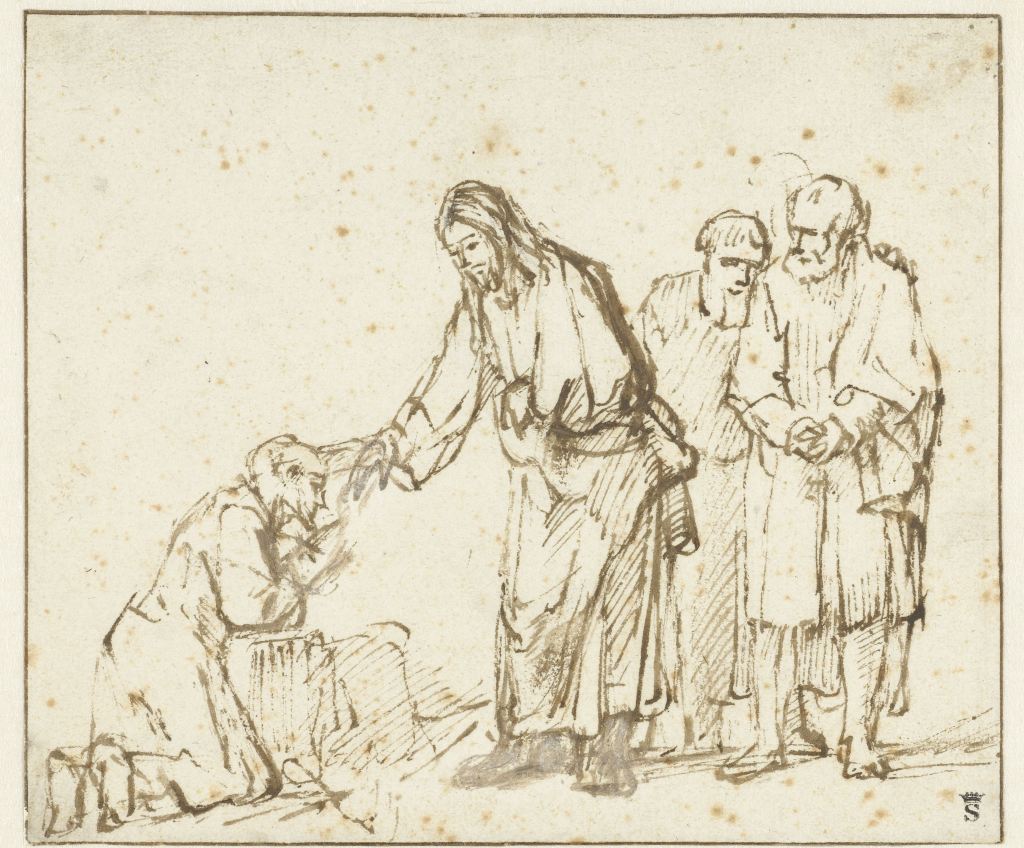
Christ healing a leper, by Rembrandt van Rijn, circa 1650-1655. Rijksmuseum, Amsterdam.

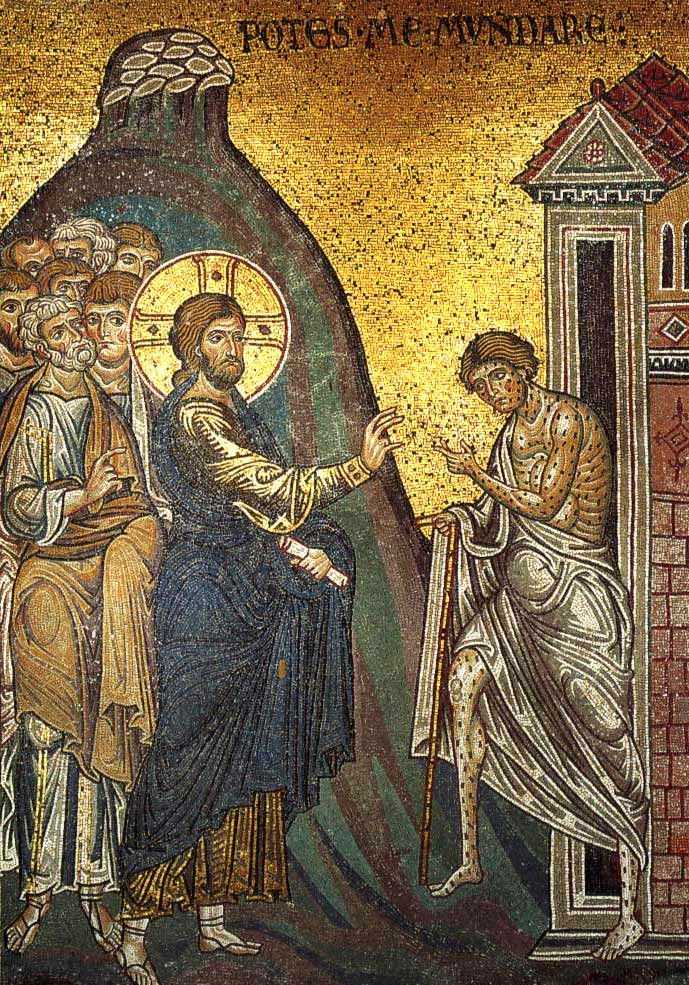
For this third Sunday after Epiphany, Bach wrote four cantatas: 73, 111, 72, and 156. The Bible story for this Sunday is about the miracle of Christ healing a leper. Last year I mentioned that I had a hard time finding the corresponding art for that story. My readers immediately came to the rescue, and pointed me to the two images featured in today’s post. Thank you again!

My favorite of all these cantatas is Cantata 73 Herr, wie du willt, so schick’s mit mir, especially in the 2013 recording by Herreweghe. Please find that recording here on Spotify. Soloists are Dorothee Mields (soprano), Thomas Hobbs (tenor), and Peter Kooij (bass). If you don’t have access to Spotify, you can find their 1990 recording here on YouTube. Soloists on this older recording are: Barbara Schlick (soprano), Howard Crook (tenor), and Peter Kooij (bass).

I had been planning to attend a live performance by Herreweghe of this cantata as well as another one of my favorites, Cantata 198, on January 29 in Brussels, but unfortunately the programming of that concert was changed to the Mass in B Minor. I completely understand the reasoning behind this, and I am absolutely thrilled for the musicians of Collegium Vocale Gent that they get to perform for an audience after all (until earlier this week, it looked as if all concerts in Belgium would be canceled until the end of this month), but I’m so sad about the cantatas!

Please find the German texts with English translations of Cantata 73 here, and the score here.

Jesus healing a leper, Mosaic, 12th century. Cathedral of the Assumption, Monreale, Sicily.

Especially the bass aria makes Herreweghe’s recording of this cantata tower above all others. It is so well done by Peter Kooij and the orchestra; it moves me every time I listen to it.

The best part for me is the illustration of “Leichenglocken” (death bells) by pizzicato strings and a somewhat “tolling” movement in the vocal part. Bach used this feature in many other cantatas, for example in (cantata number/movement number): 8/1, 95/5, 105/4, 127/3, 161/4, 198/4.

To know what else to listen for in this cantata, please read my post from 2016 . There I also explain how this cantata is connected to Cantata 72.

Wieneke Gorter, January 22, 2022.

Bach’s Music for Ascension Day

13 Thursday May 2021

Posted by cantatasonmymind in Ascension, Cantatas, Leipzig

≈ Leave a comment

Tags

Amsterdam Baroque Orchestra, Andrew Tortise, Annekathrin Laabs, Ascension, Ascension Oratorio, Barbara Schlick, Bernhard Landauer, BWV 11, BWV 128, BWV 37, BWV 43, Catherine Patriasz, Charles Daniels, Christiane Mariane von Ziegler, Christmas Oratorio, Christoph Prégardien, Collegium Vocale Gent, Dietrich Henschel, English Baroque Soloists, John Eliot Gardiner, Klaus Mertens, Lenneke Ruiten, Meg Bragle, Miriam Feuersinger, Peter Kooij, Philippe Herreweghe, Sibylla Rubens, Ton Koopman, Wolf Matthias Friedrich

The Ascension, from the illuminated 15th-century manuscript Les Très Riches Heures du duc de Berry, Folio 184r – Musée Condé, Chantilly, France.

Today was Ascension Day. In Bach’s time this was a very important holiday in the churches. Many countries in Europe have a four-day weekend starting on this Thursday. I did too as a kid growing up in the Netherlands. But we didn’t go to church on this day, and I don’t remember my mother playing the Ascension cantatas or the Ascension Oratorio on the turntable at home on this day. Instead we went for a bike ride, visit grandparents, or go camping. I didn’t know Bach’s music for Ascension Day at all until we performed BWV 11 and 43 with California Bach Society in the early 2000s. The choruses from these compositions are among the most fun I have every sung in a choir. I love the syncopated rhythms.

Here is an overview of Bach’s music for Ascension Day, as far as we know, in order of creation:

In 1724, Bach wrote Cantata 37 Wer da gläubet und getäuft wird (Whoever believes and is baptised). Listen to it here. Soloists in this recording by Ton Koopman/Amsterdam Baroque Orchestra are Sibylla Rubens, soprano; Bernhard Landauer, alto; Christoph Prégardien, tenor; and Klaus Mertens, bass.

In 1725, as part of the series of cantatas on texts by Christiane Mariane von Ziegler, Bach wrote Cantata 128 Auf Christi Himmelfahrt allein (On Christ’s ascension alone). Listen to it here. Soloists on this live recording by John Eliot Gardiner/English Baroque Soloists are Lenneke Ruiten, soprano; Meg Bragle, mezzo soprano; Andrew Tortise, tenor; and Dietrich Henschel, bass. Find my blog post from 2018 about this cantata, which includes a different recording by Gardiner here.

The last Bach cantata we have for this holiday is from 1726: Cantata 43 Gott fähret auf mit Jauchzen (God ascends with shouts of joy). Listen to it here. Soloists in this live recording by Rudolf Lutz/J.S. Bach Foundation are Miriam Feuersinger, soprano; Annekathrin Laabs, alto; Charles Daniels, tenor; and Wolf Matthias Friedrich, bass.

Nine years later, Bach wrote his Ascension Oratorio, BWV 11 Lobet Gott in seinen Reichen (Praise God in His kingdoms), incorrectly labeled as a cantata in the 19th century. Bach might have been inspired by the Christmas Oratorio he had written only five months before that.

On that Ascension Day, Thursday, May 19, 1735, this oratorio was performed in the morning service in the St. Nicholas Church, and again in the afternoon service in the St. Thomas Church. Watch the wonderful opening chorus here in a live performance by Philippe Herreweghe/Collegium Vocale Gent from 2014 from the Chapelle de la Trinité in Lyon, France. Or listen to the entire oratorio by Philippe Herreweghe/Collegium Vocale Gent on a CD recording from 1993 here. Soloists on that 1993 recording are Barbara Schlick, soprano; Catherine Patriasz, alto; Christoph Prégardien, tenor; and Peter Kooij, bass.

Wieneke Gorter, May 13, 2021.

Passion highlights and Easter links

03 Saturday Apr 2021

Posted by cantatasonmymind in Cantatas, Easter, Leipzig, Weimar

≈ Leave a comment

Tags

Alberto Miguélez Rouco, Arttu Kataja, Collegium Vocale Gent, Combattimento Consort, Cynthia Miller Freivogel, Daniel Johannsen, Florian Just, Johannes Kammler, Klaas Stok, Maarten Engeltjes, Marc Pantus, Netherlands Bach Society, Philippe Herreweghe, Pieter Dirksen, Renate Arends, Rene Jacobs, Robin Johannsen, St. John Passion, St. Matthew Passion, Thomas Hobbs

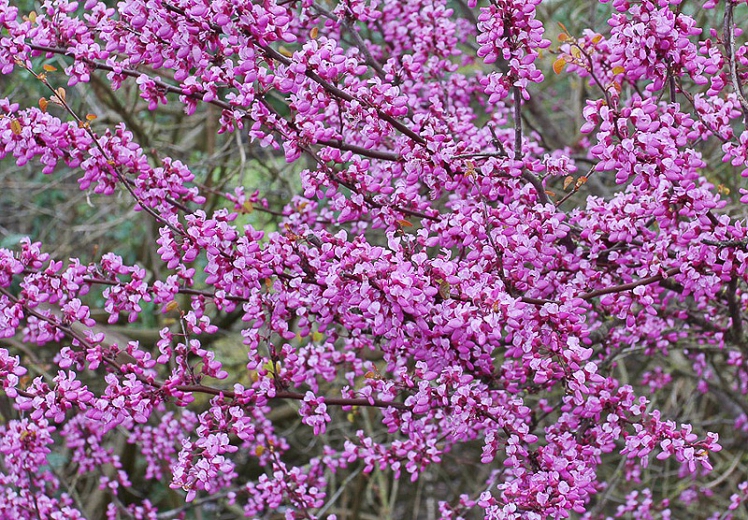
  • Wild California Lilac (Ceanothus)
  • Western Redbud (Cercis Occidentalis)

A little over 22 years ago, my husband and I moved from the Netherlands to California. My husband is a Jazz bass player in his spare time, so for him the music was another aspect to “living in Paradise.” There are many more Jazz performances and festivals here than in Europe, and there are lots of people here to do jam sessions with.

But for me it was a different story. I found a wonderful voice teacher and a good choir to sing in, but I missed the strong Dutch tradition of hearing and performing Bach’s Passions in the weeks before Easter. I used to have my biggest bouts of homesickness around that time of year. The heartache was softened only by it being my most favorite blooming season in California: the few weeks when two native trees, the purple Western Redbud (Cercis Occidentalis) and the blue-violet wild lilac (Ceanothus) bloom at the same time. The photos here don’t really capture how beautiful those colors are and how stunning it is when you see them together in the landscape, but it is something that makes me very happy.

Last year I didn’t have any homesickness, because all Passions in the Netherlands or Belgium I could have attended or participated in were canceled, so I didn’t feel I was missing anything. And while the world locked down, at the same time it became more accessible to me, because performances were now being moved to the internet. This meant I could watch the dress rehearsal of Herreweghe’s St. John Passion without the 11-hour plane ride or the struggle with jet lag. (That video registration is still available: find it here – scroll a bit down to where it says “Passions 2020”).

This year there were so many online St. Matthew or St. John Passion offerings from the Netherlands it was almost overwhelming. I didn’t have time to listen to all of them before writing this today, because most of the videos didn’t go live until yesterday, Good Friday. So I’ll just focus on a few that stood out to me.

Find the English translations of the St. John Passion here; the St. Matthew Passion here.

Cynthia Miller Freivogel

In the category “most interactive creation” I would like to mention the St. John Passion by Zing als vanZelf. An initiative of online singing instructor Bert van de Wetering, this organization invited thousands of singers to record themselves singing the chorales at home in the weeks leading up to Good Friday. They then recorded a performance with professional soloists singing the arias and the choruses with the excellent Combattimento Consort (Cynthia Miller Freivogel, concertmaster) as the orchestra, this all under the direction of Pieter Dirksen. Then they edited all this together into a video where you see the performance from a pretty church in a small town in the Netherlands, but every time there is a chorale you see the “choir” of individual volunteer singers pieced together on the screen. A really clever and touching solution. Watch it here. If you enjoy it, please consider making a donation, similar to what you would have paid if you would have attended this in person. The link for that is right there under the video.

Klaas Stok

For readers who understand Dutch and would like to learn more about the St. Matthew Passion, I highly recommend the video program from the organization that every year brings performances of this masterpiece to the beautiful Bergkerk in the city of Deventer. This year they recorded four arias from the St. Matthew Passion, in the order they appear in the second half of the work: “Erbarme dich” (sung by countertenor Maarten Engeltjes), “Aus Liebe” (sung by soprano Renate Arends), “Komm, süßes Kreuz” (sung by bass Florian Just), and “Mache dich, mein Herze, rein” (sung by bass Marc Pantus). What I liked best about this video is the conversations director Klaas Stok has with each soloist before they sing their aria. Through these conversations, I gained a lot of new insights into the meaning of the different arias. I especially loved what Klaas Stok had to say about the architecture of the piece, the role each aria plays in the overall structure, and how different movements are connected. Of all the talks, I particularly enjoyed bass Marc Pantus’ take on “Mache dich, mein Herze, rein,” the final aria on the program. You can watch this until April 14. Just click here. But please note, it is all in Dutch. Again, a link to donate is right there under the video.

Thomas Hobbs

Last but not least, the most impressive performance I listened to yesterday and today: The St. John Passion (1725 version) by the Netherlands Bach Society under the direction of René Jacobs. This was shown on Dutch television on Good Friday, so if you don’t understand Dutch, you’ll have to sit through a confusing excerpt from the St. Matthew Passion and a few ads at first, but then you can forward the video 14 minutes, to skip the pre-concert interview with René Jacobs. Soloists are Daniel Johannsen, tenor (Evangelist); Johannes Kammler, bass (Christ); Robin Johannsen, soprano; Alberto Miguélez Rouco, countertenor; Thomas Hobbs, tenor; and Arttu Kataja, bass. There is so much fluidity and phrasing in the orchestra, such a good blend in the choir, as well as excellent enunciation from the choir, it is extraordinary. All the choral movements are extremely transparent, I enjoyed that very much. Jacobs takes some risks with considerably slower tempi in the chorales than is usual in the Historical Performance Practice world, stretching out the pauses in the Evangelist’s recitatives, and taking long fermatas on ending notes, but it is never old-fashioned or too Romantic. It makes for a very engaging, one of a kind performance. All soloists are wonderful, but I would like to give a shout-out to the two tenors: Daniel Johannsen for being an excellent Evangelist, and Thomas Hobbs for his fabulous “Zerschmettert mich” aria (one of the arias that is not in the better known, 1724 version). Donate to the Netherlands Bach Society here.

If you don’t feel like listening to any Passion music anymore, please find my three Easter blog posts from previous years through the following links:

Bach’s Easter in Weimar, 1715

Bach’s Easter in Leipzig, 1724

Bach’s Easter in Leipzig, 1725

Wieneke Gorter, April 3, 2021.

Something to look forward to

27 Saturday Feb 2021

Posted by cantatasonmymind in Cantatas

≈ 1 Comment

Tags

Alex Potter, BWV 118, BWV 198, BWV 45, Collegium Vocale Gent, Dorothee Mields, Meins Lebens Licht, Peter Kooij, Philippe Herreweghe, Thomas Hobbs

Since January 2020, when I heard that Philippe Herreweghe and Collegium Vocale Gent were recording BWV 45, 118, and 198 with my favorite soloists, I have been eager to listen to that new album, “Meins Lebens Licht.” The release date, March 19, is now almost here, and there are some excellent previews available that I would love to share today.

There is a wonderful “making of” video of this CD recording. Find it here. In this video, soprano Dorothee Mields and bass Peter Kooij talk about how much working with Herreweghe means to them, you see a glimpse of how Herreweghe works with his choir and orchestra, and … you get to hear the exhilirating opening chorus of Cantata 45 in its entirety, part of the beautiful motet “O, Jesu Christ, Meins Lebens Licht,” and several excerpts of the choral movements of Cantata 198. Some of my all-time favorite music, performed by some of the most sensitive interpreters of this repertoire today: it’s a bit of heaven for me.

On the record label’s website, you can hear a bit of each track. Find that here. If you like all of this, please consider supporting the artists by pre-ordering this album. That way you can also start listening right away on March 19. Pre-order here on iTunes, or here on Amazon.

Wieneke Gorter, February 27, 2021

Herreweghe live from Antwerp

13 Saturday Feb 2021

Posted by cantatasonmymind in 1723 Trinity season special series, Cantatas, Chorale cantatas 1724/1725, Leipzig, Trinity, Weimar

≈ Leave a comment

Tags

Alex Potter, bwv 127, BWV 138, BWV 161, Collegium Vocale Gent, Dorothee Mields, Estomihi, Guy Cutting, Peter Kooij, Philippe Herreweghe, Purification of Mary, Shunske Sato, Thomas Hobbs, Trinity 15, Trinity 16

Philippe Herreweghe at the Bach Academy Bruges, photo by M.Hendrickx

On January 31, 2021, Philippe Herreweghe and his Collegium Vocale Gent performed three cantatas at the beautiful concert hall “De Singel” in Antwerp, Belgium. In my humble opinion, this was a very moving and inspired performance, and my hat is off to everyone on stage, that they were able to find this energy and inspiration in Bach’s music, in the texts, and in making music together, because they were performing without an audience. Please find the live video recording here on YouTube. Soloists are Dorothee Mields, soprano; Alex Potter, alto; Guy Cutting, tenor; and Peter Kooij, bass.

I provide a bit of a review and a bit of a listening guide here, with links to my blog posts from previous years about these three cantatas. I did not grow up with any of these cantatas, they weren’t part of the repertoire my mother played on the turntable at home. I learned about them in the process of doing research and writing for this blog (and through other people, in the case of Cantata 127).

Cantata 127 Herr Jesu Christ, wahr’ Mensch und Gott

This cantata, written for today, the last Sunday before Lent, is a great choice for the start of a concert, because it immediately grabs you and draws you in. I already hold a special place in my heart for this music because of the soprano aria (beautifully sung here by Dorothee Mields) being performed at my mother’s funeral service in The Hague in 2010. But even without that, the work is in my all-time top 10. And I am not alone: Bach biographer Spitta called it “perhaps the most important” cantata, and it received “the most beautiful” qualification by Arnold Schering as well as Ton Koopman.  

The cantata is part of Bach’s 1724/1725 cycle of chorale cantatas, and compared to all previous compositions in that cycle, this opening chorus is the most complex and intricate. Click on the link at the end of this paragraph to read why. I love hearing Collegium Vocale sing this. Dorothee Mields and Peter Kooij are fabulous in their arias, and I enjoy hearing and watching tenor Guy Cutting sing. He’s a new star in the Herreweghe firmament. The soprano aria is of course stunning, but what about that bass aria? Whether a foreshadowing of the St. Matthew Passion or a dramatic end to the series of chorale cantatas, Bach had clearly made “studies” for it in his previous three cantatas of that year. Read all about it in my blog post from 2018.

Cantata 138 Warum betrübst du dich, mein Herz

I am so happy with the video recording from January 31, because it eliminates a dilemma for me. When I first wrote about this cantata (written for the 15th Sunday after Trinity in 1723), I wasn’t able to choose between Herreweghe’s recordings from 1992 and 2013, but I feel the video recording from this year is the clear winner! I love the inspired singing by all four soloists, but find Alex Potter’s singing in this cantata especially stunning. In his recitative (starting at 26:23), the combination of his understanding of the text and what he can do with his voice moves me deeply. So much that when the choir basses then follow with their beautiful entrance, I am close to tears. If you feel I’m getting too sentimental here, don’t worry. My blog post from 2016 is about completely different things: a European children’s animation, a possible, “movie script scenario,” explanation of the relatively simple text in this cantata, and Bach’s recycling of the bass aria.

Cantata 161 Komm, du süße Todesstunde

What a wonderful surprise that Herreweghe included this cantata (written for the 16th Sunday after Trinity but also for the Purification of Mary/Presentation of Jesus at the Temple, which was February 2) in this program. It is such a beautiful and moving composition. In my blog post from this past fall I could only describe how in 2019, when programming the All Souls program for the Netherlands Bach Society, Alex Potter had the brilliant idea to combine the recorders from the Weimar version of this cantata with the sung chorale Herzlich tut mich verlangen nach einem sel’gen End from the Leipzig version. What a delight to see that Herreweghe had adopted this exact idea for this performance in Antwerp, and that we can thus hear and see Alex Potter and Dorothee Mields perform this opening movement together. I love all the singing and playing in this cantata very much, but for me, the tenor aria can’t rival the magic of Shunske Sato accompanying Thomas Hobbs in those All Souls concerts by the Netherlands Bach Society in 2019 (as described here).

Wieneke Gorter, February 13, 2021.

The First Sunday of Advent

29 Sunday Nov 2020

Posted by cantatasonmymind in Advent, Cantatas, Chorale cantatas 1724/1725, Leipzig, Weimar

≈ Leave a comment

Tags

Bachstiftung, BWV 36, BWV 61, BWV 62, California Bach Society, Collegium Vocale Gent, Harnoncourt, J.S. Bach Foundation, J.S. Bach Stiftung, Nuria Rial, Philippe Herreweghe, Seppi Kronwitter

Hello everyone. I hope you are all safe and well. Thank you for reading this blog, and a warm welcome to all of you who started following recently. Bach wrote three cantatas for this Sunday:

In Weimar, in 1714, Bach wrote Cantata 61 Nun komm, der Heiden Heiland. This one I remember the best from my childhood, because my mother loved Seppi Kronwitter’s singing of the soprano aria on the Harnoncourt recording. Read about it here.

In Leipzig, in 1724, Bach wrote Cantata 62 Nun komm, der Heiden Heiland. My most recent writing about this cantata is from last week, not for this blog, but for that of California Bach Society. Find it here.

Since the release of Herreweghe’s recording in 1997 I have been in love with the opening chorus of Cantata 62. For me, nothing says “Christmas is coming” more strongly to me than this music. And yes, Bach wrote two Advent cantatas with the same title. You better not mix them up when you have been engaged to sing the bass solos. Read a story about that here. If you would like to learn more about this opening chorus, or even sing along to it yourself, I encourage you to sign up for California Bach Society’s free workshop on this cantata this coming Saturday, December 5, at 11 am Pacific Time, on Zoom.

Nuria Rial

In 1731, Bach transformed a secular birthday cantata from 1725 into Cantata 36 Schwingt freudig euch empor. Read about it here. My favorite interpretation of the soprano aria is by Nuria Rial. I first heard Nuria Rial sing on the German radio station WDR3, exactly one month after my mother passed away in 2010. I was staying at my parents’ house in the Netherlands with my kids. My mother had always preferred the German classical music station over the Dutch one, especially for their Early music programming, so WDR3 was pre-programmed into my parents’ fancy equipment. The radio host played a piece from this album, and I was mesmerized. After it was over I went on Facebook and told all my singer friends (that’s why I still know what day it was). But I didn’t find out about her live recording of the soprano aria from Cantata 36 with the J.S. Bach Foundation until 2014.

Wieneke Gorter, November 28, 2020

Biden’s Aria

14 Saturday Nov 2020

Posted by cantatasonmymind in Cantatas, Chorale cantatas 1724/1725, Leipzig, Trinity

≈ Leave a comment

Tags

23rd Sunday after Trinity, BWV 139, BWV 38, BWV 5, BWV 78, Howard Crook, J.S. Bach Foundation, J.S. Bach Stiftung, Joe Biden, Johannes Kaleschke, Philippe Herreweghe, Raphael Höhn, Rudolf Lutz, tenor arias, Trinity 23, trio sonatas

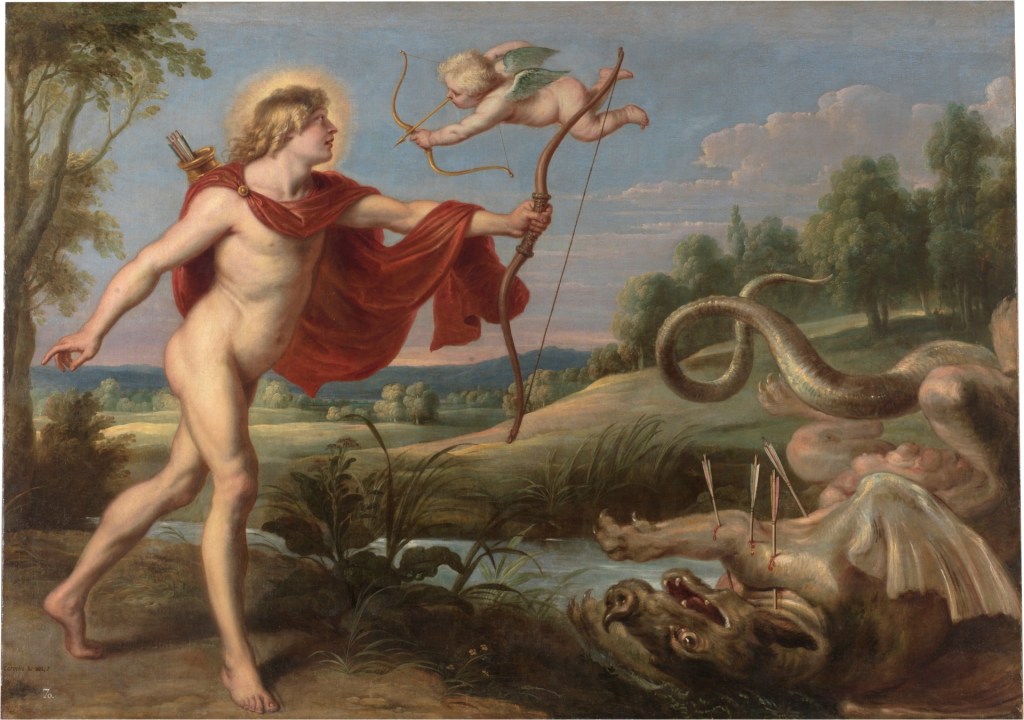
Apollo and the Python by Cornelis de Vos, 1636 – 1638. Oil on Canvas, after a sketch by Rubens. Museo del Prado, Madrid, Spain (not on display).

I always write about bass arias around this time of year (see this post). But let’s not forget about the tenor arias. As I’ve said before, I believe that Bach wrote some of his best trio sonatas in the form of tenor arias. Wonderful examples of this are the following tenor arias from the Fall of 1724:

from Cantata 78, sung here by Howard Crook on the Herreweghe recording from 1988

from Cantata 5, sung here by Raphael Höhn with the J.S. Bach Foundation

from Cantata 38, sung here by Johannes Kaleschke with the J.S. Bach Foundation — this is the “consolation” aria I mentioned in my previous blog post.

And for today, the 23rd Sunday after Trinity, the fabulous tenor aria from Cantata 139 Wohl dem, der sich auf seinen Gott, sung here by Johannes Kaleschke with the J.S. Bach Foundation. When I looked at the text of this aria again today, I realized that if Cantata 139 were an opera, this aria would be Joe Biden’s:

Gott ist mein Freund; was hilft das Toben,
So wider mich ein Feind erhoben!
Ich bin getrost bei Neid und Hass.
Ja, redet nur die Wahrheit spärlich,
Seid immer falsch, was tut mir das?
Ihr Spötter seid mir ungefährlich.

God is my friend; what use is all the raging
that an enemy has raised against me!
I am consoled in the midst of envy and hate.
Yes, though you speak the truth only rarely,
though you are always false, what is that to me?
You scoffers are to me no danger.

Wieneke Gorter, November 14, 2020

← Older posts

Recent Posts

  • “Missa Miniatura” by CONTINUUM/Elina Albach Even More Moving in 2025
  • Bachfest Leipzig 2025
  • Bach Cantatas for Christmas – 1724 and 1734 editions
  • Fourth Sunday of Advent – more insight into Cantata 62 helped me better understand Bach’s Christmas Oratorio
  • Saint Ambrose and Luther in Milan – Second Sunday of Advent

Archives

  • August 2025
  • July 2025
  • December 2024
  • November 2024
  • June 2024
  • January 2024
  • December 2023
  • October 2023
  • September 2023
  • August 2023
  • April 2022
  • February 2022
  • January 2022
  • December 2021
  • November 2021
  • June 2021
  • May 2021
  • April 2021
  • February 2021
  • January 2021
  • December 2020
  • November 2020
  • October 2020
  • September 2020
  • August 2020
  • July 2020
  • May 2020
  • April 2020
  • March 2020
  • February 2020
  • January 2020
  • December 2019
  • November 2019
  • May 2018
  • April 2018
  • March 2018
  • February 2018
  • January 2018
  • December 2017
  • November 2017
  • October 2017
  • September 2017
  • August 2017
  • July 2017
  • June 2017
  • May 2017
  • April 2017
  • March 2017
  • February 2017
  • January 2017
  • December 2016
  • November 2016
  • October 2016
  • September 2016
  • August 2016
  • July 2016
  • June 2016
  • May 2016
  • April 2016
  • March 2016
  • February 2016
  • January 2016

Enter your email address to follow this blog and receive notifications of new posts by email.

Join 338 other subscribers

Categories

  • 1723 Trinity season special series
  • Advent
  • After Easter
  • Ascension
  • Bach's life
  • Cantatas
  • Chorale cantatas 1724/1725
  • Christmas
  • Easter
  • Epiphany
  • Following Bach in 1725
  • Köthen
  • Leipzig
  • Septuagesima
  • Travel
  • Trinity
  • Weimar

Meta

  • Create account
  • Log in
  • Entries feed
  • Comments feed
  • WordPress.com

Website Built with WordPress.com.

  • Subscribe Subscribed
    • Weekly Cantata
    • Join 158 other subscribers
    • Already have a WordPress.com account? Log in now.
    • Weekly Cantata
    • Subscribe Subscribed
    • Sign up
    • Log in
    • Report this content
    • View site in Reader
    • Manage subscriptions
    • Collapse this bar
 

Loading Comments...