Weekly Cantata

Weekly Cantata

Tag Archives: Bachstiftung

A new photo and a new video (BWV 48 and 5 for Trinity 19)

17 Saturday Oct 2020

Posted by cantatasonmymind in 1723 Trinity season special series, Cantatas, Chorale cantatas 1724/1725, Leipzig, Trinity

≈ Leave a comment

Tags

19th Sunday after Trinity, Bachstiftung, BWV 48, BWV 5, Capella Brancacci, Eva Borhi, Florence, Italy, J.S. Bach Foundation, J.S. Bach Stiftung, Jan Börner, Manuel Walser, Mirjam Berli, Patrick Henrichs, Philippe Herreweghe, Raphael Höhn, Rudolf Lutz, Santa Maria del Carmine, Trinity 19

Fresco’s in the Brancacci Chapel of Santa Maria del Carmine, Florence, Italy, by Masolino, 1424-25. One of the miracles pictured is The Healing of the Cripple, which was the Gospel story for the 19th Sunday after Trinity. Photo by the author.

At the end of a two-week trip to Italy in the summer of 2018 (my family’s first visit to that country), we would have only one afternoon and night in Florence. After booking our hotel in a neighborhood a good friend had recommended, I saw on Google maps that the hotel was around the corner from a church called Santa Maria del Carmine.

The name rang a bell, but I didn’t immediately realize why. Then I started searching my blog, and yes: there it was, the fresco of The Healing of the Cripple, from the Brancacci Chapel in that church, in my blog post from 2016 about Cantata 48. After seeing a lot of art in other cities in Italy and with a big train trip ahead of us, we decided to have this be the only art we would go see in Florence, and save the rest for another trip. It was a good decision, because this way I could really let it sink in that I was seeing these frescos in real life, and this way we had some time left to eat ice cream, rest, see the sun set over the city, and enjoy a good meal.

In my blog post from 2016, I recommended Herreweghe’s recording of Cantata 48 Ich elender Mensch. (from 1723), and I still stand by that choice. Find all the links to the recording, a comparison with the St. Matthew Passion, and my explanation of the silver lining in the opening chorus here.

One year later, in 2017, I wrote about Cantata 5, Wo soll ich fliehen hin? which Bach wrote for this same 19th Sunday after Trinity, in 1724. Since then, I have a new favorite recording of this cantata: the excellent 2018 performance by the J.S. Bach Foundation that was released to YouTube in April 2019. You can find that video here. Soloists are: Soprano: Mirjam Berli; Alto: Jan Börner; Tenor: Raphael Höhn; Bass: Manuel Walser; Violin: Eva Borhi; Tromba da tirarsi: Patrick Henrichs.

Find the German text with English translation of Cantata 5 here, and the score here.

For a list of the bass arias with trumpet the Leipzig congregations would have heard between June 1723 (when Bach started working in Leipzig) and October 1724 (when he wrote Cantata 5), including links for listening, read my blog post from 2017 here.

Wieneke Gorter, October 17, 2020
Follow this blog on Facebook or Instagram

The debut of the “flauto piccolo” in a Leipzig cantata

10 Saturday Oct 2020

Posted by cantatasonmymind in Cantatas, Chorale cantatas 1724/1725, Leipzig, Trinity

≈ Leave a comment

Tags

18th Sunday after Trinity, Bachstiftung, BWV 96, J.S. Bach Foundation, Maurice Steger, Rudolf Lutz, Trinity 18

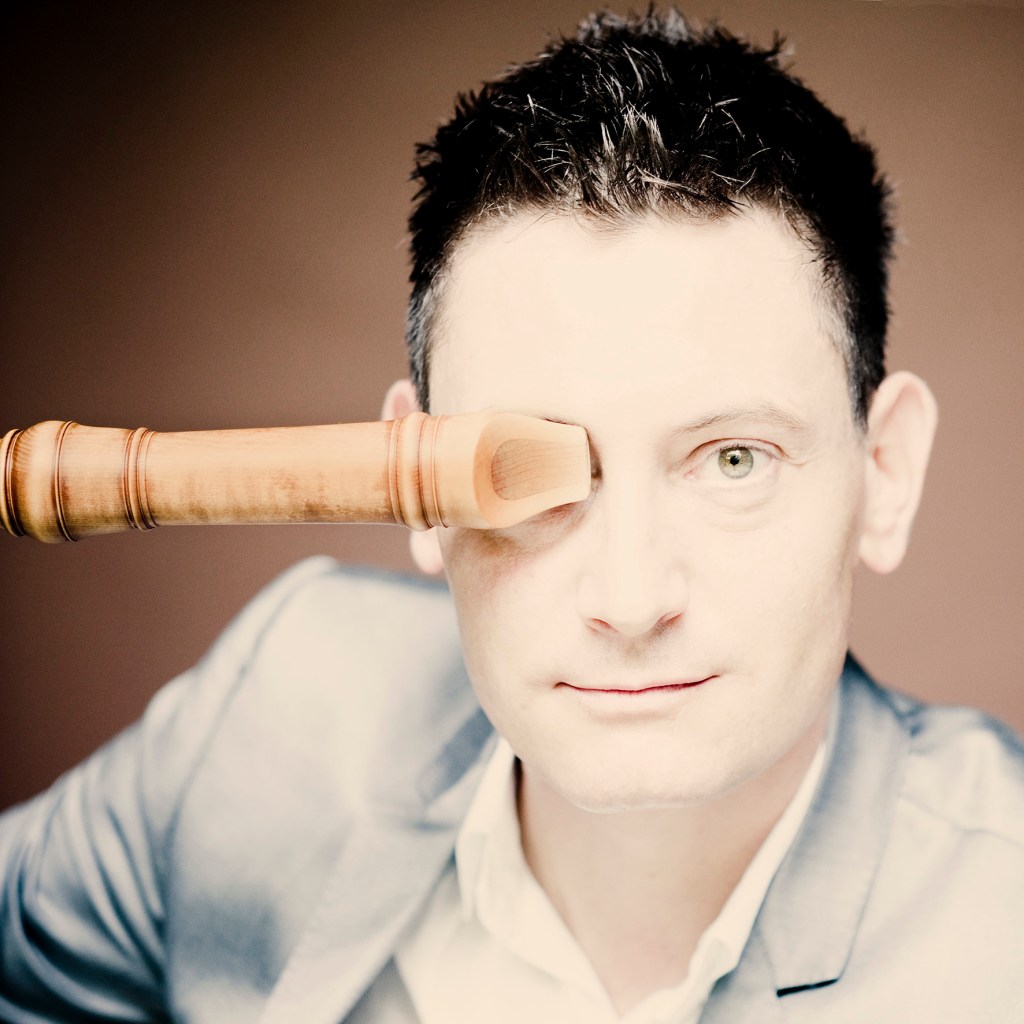
  • Maurice Steger. Photo by Marco Borggreve
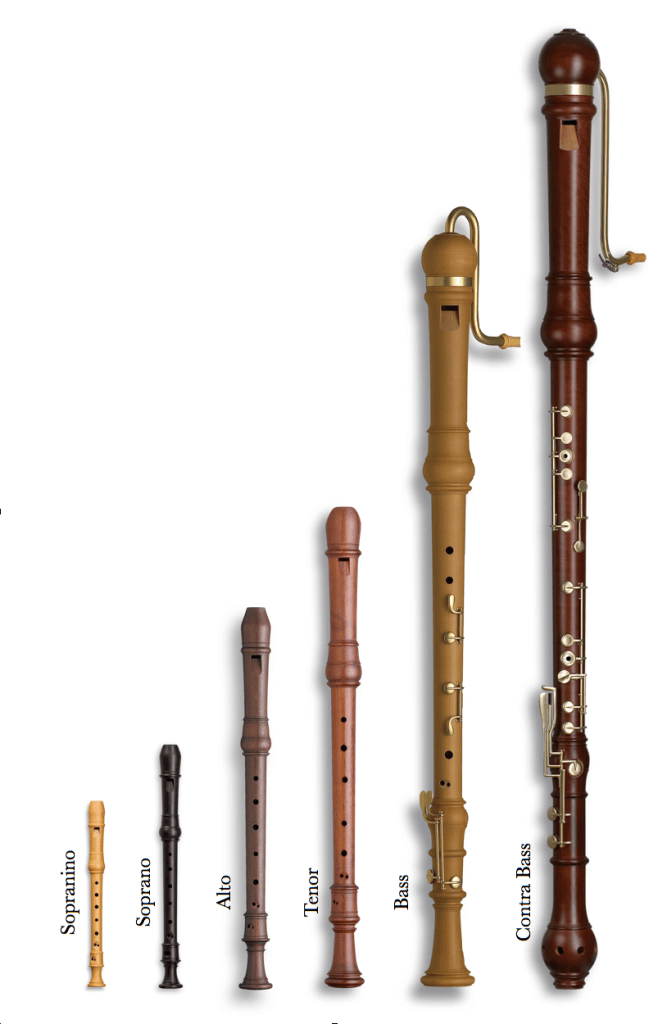
  • Sopranino recorder at left

On Sunday October 8, 1724, Bach introduced a new instrument to his Leipzig cantata audiences: the flauto piccolo, or sopranino recorder, in Cantata 96 Herr Christ, der einge Gottessohn. He did this to illustrate the word “Morgenstern” (Morning Star) in the text of the opening chorus, creating a constellation over the highest notes of the choir sopranos with the even higher notes of the recorder. 

Thanks to a video by the J.S. Bach Foundation that was released to YouTube in 2018, you can now watch an excellent recorder player, Maurice Steger, in action on this instrument in this cantata.

Go to my blog post from 2017 (updated with the new recording and a few other things), to read why Bach needed a chorale with the word “Gottessohn” (son of God) for this cantata.

Wieneke Gorter, October 8, 2020

Follow this blog on Facebook or Instagram

The Bachs’ summer trip to Köthen in 1724, new insights, and new videos (BWV 107)

25 Saturday Jul 2020

Posted by cantatasonmymind in Cantatas, Chorale cantatas 1724/1725, Leipzig

≈ Leave a comment

Tags

Anna Magdalena Bach, Bachfest Leipzig, Bachfest Malaysia, Bachstiftung, BWV 107, David Chin, David Yearsley, Encountering Bach, Julia Doyle, Köthen, Makoto Sakurada, Michael Maul, Philippe Herreweghe, Rudolf Lutz, Trinity 7, Wolf Matthias Friedrich

Backside of the complex in which Bach rented an apartment in Köthen from 1719 to 1723. His wedding to Anna Magdalena in December 1721 was celebrated in this house, and several of their fellow court musicians had an apartment here too.

This week I’ve been paying a bit more attention to all the YouTube channels I subscribe to. So I can point you just in time to the live recording of cantata 107 Was willst du dich betrüben by the J.S Bach Foundation. Soloists are Julia Doyle, soprano; Makoto Sakurada, tenor; and Wolf-Matthias Friedrich, bass. My favorite recording of this cantata is still the one by Herreweghe from 1993 (the lines in the opening chorus! the bass solos!) but I love this one by the Bach Foundation too. It is very well done and very moving, and with no live concerts here in California at all yet, I appreciate watching live performances even more right now.

Another YouTube discovery I especially enjoy this Covid summer is the “Encountering Bach” documentary series. This wonderful production by Bachfest Malaysia currently has six episodes available, and more are still to come. The episodes are nice and short (between 8 and 13 minutes), but full of information, and very well geared towards a global audience. Bachfest Malaysia’s artistic director David Chin travels to all the places where Bach worked, and he does this together with German Bach specialist Michael Maul.* In all the locations they get help from local experts, from a soprano soloist who’s also a St. Thomas School mom, to the organist who nowadays plays the “Bach organ” in Arnstadt, to a manuscript specialist of the Bach Archives in Leipzig. Believe it or not, but I myself have never visited any of these places, and I travel vicariously through their experiences.

For the benefit of some more background for this blog post, I’d like you to watch episode 5, which is about Bach’s time in Köthen, and how he appreciated his employer there. It is no problem to watch this before you watch the other episodes. If you have more time, treat yourself to the entire series.

Episode 5 explains that Bach’s employer in Köthen belonged to the Calvinist church, where music other than chorale singing and organ playing wasn’t allowed. However the video also shows the Lutheran church where Bach and many of his fellow court musicians would have attended services. The experts suggest that it could have been here that Bach and friends would have performed re-runs of Bach’s Weimar cantatas. When I watched this, it dawned on me that a scenario I came up with in 2017 should be adjusted a bit.

In my 2017 blog post about Cantata 107, I explained that in July 1724, Bach and Anna Magdalena left Leipzig for a while (anywhere from a few days to almost two weeks) in order to visit their previous employer in Köthen and perform at his castle. Bach had been Capellmeister there, and Anna Magdalena a very highly paid soprano.

In that post, I painted a “movie scenario,” imagining that cantata 107 Was willst du dich betrüben would have been “tested” in the castle in Köthen, but I now realize it would probably have happened in the local Lutheran church instead. And in that case it would not have been very likely that Anna Magdalena would have sung the soprano aria. (Though they might have played the music through at the house of one of the other court musicians, who knows. Hoping that David Yearsley’s book on Anna Magdalena Bach will give me some more clarity on this.)

This all also means that I would like to circle back to my post from last week. I said:

“For 1724, it is very likely that Bach never wrote a cantata that year for this Sunday. Because later in his life, Bach most probably wrote Cantata 9 Es ist das Heil uns kommen her for this moment in the church year, in an effort to fill the gaps within his 1724/1725 chorale cantata cycle.”

That is all still true, but I had obviously forgotten to mention the second reason why there is no cantata from 1724 for Trinity 6, namely that Bach was in Köthen that Sunday. For some of my friends it might come as a relief that I forget some things now and then (you know who you are) but I myself was pretty shocked that I had forgotten this story that I had written about only three years ago.

Wieneke Gorter, July 25, 2020

*Michael Maul, born 1978, has been the Artistic Director of the Bachfest Leipzig since 2018, and is the most famous Bach scholar of his generation.

Weekly Cantata is back!

15 Friday Nov 2019

Posted by cantatasonmymind in Cantatas, Chorale cantatas 1724/1725, Leipzig, Trinity

≈ 10 Comments

Tags

22nd Sunday after Trinity, Bachipedia.org, Bachstiftung, Balázs Máté, BWV 115, corno da tirarsi, Marc Hantaï, Olivier Picon, Rudolf Lutz

The Servant Sending his Fellow Servant to Prison, from The Parable of the Unmerciful Servant, bound in Thesaurus Sacrarum historiarum Veteris et Novi Testamenti, 1585.
Anonymous, Netherlandish. Metropolitan Museum of Art, New York (not on view).

I’m back! I’m starting with a small step, but stay tuned … a more considerable post is coming next week.

For this coming Sunday, the 22nd Sunday after Trinity, Bach wrote Cantata 89 in 1723, Cantata 115 in 1724, and Cantata 55 in 1726. Two years ago I wrote about the soprano aria from Cantata 115, not really being able to choose between Susanne Rydén with Bach Collegium Japan or Dorothee Mields with Herreweghe. I also included a link to the soprano aria from Cantata 89. Read that post here.

I still recommend the Herreweghe recording from 2017 for an overall recording of this cantata. However, sometimes it is nice to *see* a performance, and I would like to celebrate an important event in the world of Bach Cantata recordings that happened in the past year: The J.S. Bach Foundation in Switzerland (Bachstiftung) decided to make all their live video recordings of their Bach cantata performances available on YouTube, in full length. Previously, they had only made one movement of each cantata available on YouTube, and one would have to purchase the DVD or buy a live stream subscription in order to see the rest of the cantata.

So in this post I would like to share the Bachstiftung recording of Cantata 115. It was recorded on October 21, 2016, and published to YouTube on October 26, 2018.

Find the German texts with English translations here and the score here.

What is so special about this video recording is that you can see wonderful flutist Marc Hantaï at work in the opening chorus and in the soprano aria. He doesn’t appear on video that often, and they made a good choice to put him in front, so you can see his playing, and of course this way also the microphones pick up his sound better. (to hear more of what I believe is his playing, go to this post).

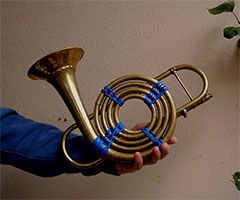
corno da tirarsi


Other instrumentalists to watch in this video: Olivier Picon on corno da tirarsi, and Balázs Máté on violoncello piccolo. Only three cantatas (46, 162, and 67) show the full name corno da tirarsi written in the manuscript, but there are 27 cantatas from Leipzig requiring a corno in which that part is not playable on a natural horn, so must have been written for this corno da tirarsi as well. Cantata 115 is included in that group. Bach is the only composer who ever mentioned this instrument in writing, and most probably his principal brass player Gottfried Reiche was the only one who ever played it. After Reiche’s death in 1734 Bach did not write for this instrument anymore, and for repeat performances of any cantatas containing a corno da tirarsi part, Bach rewrote it for other instruments. Read more about this in Olivier Picon’s article on the “corno da tirarsi” from 2010. The 27 cantatas are mentioned on page 22 of the article.

To find more of the Bachstiftung videos, search their Archive on their Bachipedia.org website. Most of the videos are “unlisted” on YouTube, so you won’t find them by doing a search within YouTube. Or, for the Dutch readers of this blog, you can use Eduard van Hengel’s new website (another terrific event of this past year!) and click on the links for all YouTube recordings he conveniently provides at the top of each page under the header “Beluister” (for an example, see the one for Cantata 115 here).

Wieneke Gorter, November 15, 2019.

Pentecost 1725

20 Sunday May 2018

Posted by cantatasonmymind in After Easter, Cantatas, Chorale cantatas 1724/1725, Leipzig

≈ Leave a comment

Tags

Bach, Bachstiftung, cantatas, Christiane Mariane von Ziegler, Harnoncourt, Pentecost, Peter Jelosits, Whitsunday

IMG_0015
The Descent of the Holy Ghost by Titian, circa 1545. Altarpiece in Santa Maria della Salute, Venice, Italy.

In Bach’s time, Pentecost was a three-day-long feast, as important in the church year as Christmas and Easter. Most of the Pentecost cantatas have trumpets, timpani, and more pull-out-all-the stops instrumentation, as was appropriate for  feast days.

In 1725 Bach performed the following cantatas. All these three cantatas are part of the series of nine cantatas on poetry by Christiane Mariana von Ziegler Bach wrote after Easter that year. Click on the links to find recordings on YouTube.

Sunday May 20, Whit Sunday, or First Day of Pentecost: Cantata 74 Wer mich liebet, der wird mein Wort halten.

Find the text of Cantata 74 here, and the score here.

Monday May 21, Whit Monday, or Second Day of Pentecost: Cantata 68 Also hat Gott die Welt geliebt, with the famous soprano aria Mein glaübiges Herze – gloriously sung by Peter Jelosits on the Harnoncourt recording.

Tuesday May 22, Whit Tuesday, or Third Day of Pentecost: Cantata 175 Er rufet seinen Schafen mit Namen. (complete cantata by the Bach Foundation).

Find the text of Cantata 175 here, and the score here.

Bach might have remembered from a year before that writing three cantatas in three days was going to be too much, so he reworked the opening of cantata 59 (a soprano-bass duet) from 1724 into an opening chorus for four voice parts and full orchestra in cantata 74 in 1725. He also transformed the bass-aria with violin solo from cantata 59 into a soprano aria with oboe da caccia in cantata 74.

Wieneke Gorter, May 20, 2018, links updated May 19, 2024.

Wedding music for the 20th Sunday after Trinity, with a gorgeous soprano aria

30 Monday Oct 2017

Posted by cantatasonmymind in Cantatas, Chorale cantatas 1724/1725, Köthen, Leipzig, Trinity

≈ Leave a comment

Tags

Advent, Bach, Bachstiftung, BWV 140, BWV 180, BWV 21, BWV 61, Christoph Prégardien, Christophe Coin, duet, Fabrice Hayoz, flute, J.S. Bach Foundation, Jan Börner, Julius Pfeifer, Köthen, Leipzig, Maria Christina Kiehr, parable of the Wedding Banquet, recorder, Rudolf Lutz, Trinity, Trinity 20, violin, Weimar

Bachsaal_Schloss_Koethen

The mirror-hall, now called “Bach hall” in Köthen, where Bach worked from 1717 to 1723.

The 1724 cantata for yesterday, Cantata 180 Schmücke dich, o liebe Seele (Adorn yourself, beloved soul) is full of luster, with an opening chorus, a tenor/flute aria and a soprano/orchestra aria that make me think of the orchestral suites Bach wrote at the court of Köthen between 1717 and 1723. With all this joy already from the beginning, it sounds like a wedding cantata.

The recording I appreciate most is the one by the Swiss J.S. Bach Foundation from 2009, because I feel they bring the most light into the opening chorus and the soprano aria, illustrate the “knocking” the best in the tenor aria, and the singers do a great job bringing out the text. Soloists: Maria Christina Kiehr, soprano; Jan Börner, counter-tenor; Julius Pfeifer, tenor; and Fabrice Hayoz, bass.  Update from 2020: When I first wrote about this cantata, in 2017, only the soprano aria from this recording was available on YouTube, but in 2018 they made it available in full length. You can find it here.

Find the German text with English translation here, and the score here.

Why all this luster in this cantata? In Bach’s time, the Gospel reading for this Sunday, the parable of the Wedding Banquet (Matthew 22: 1-14) was seen in relation to the union of the faithful with Christ, both during communion as well as during the heavenly banquet in the afterlife. If you then realize that that union between the soul of the faithful and Christ was in that time often compared to the marriage between bride and groom, it was not unusual to present something that sounds like wedding music on this communion Sunday.  Expressing the love-like relationship of Jesus and the soul was not a foreign concept for Bach. He did it beautifully in the duet in Cantata 21 from Weimar (read my post about that cantata here) and later also in Cantata 140 Wachet auf, ruft uns die Stimme.**

In addition to this important link to the Bible texts, I think Bach might have an ulterior motive to bring so much splendor in a cantata for a Communion Sunday. On those Sundays, the congregations in the Leipzig churches would have been larger, and more prominent (read: wish-to-be-seen) families would have been present. Having followed Bach’s cantata compositions in the order he wrote them in Leipzig for almost two years now, I am seeing this pattern around large events in Leipzig: important audience = time to show off his star players and singers and his composition skills.

In his lecture (2020 update: now with English subtitles!), Rudolf Lutz, the director of the J.S. Bach Foundation, points out all the musical elements that make the opening chorus so utterly joyful and full of splendor. If you start watching at 19 minutes, you can see/hear how he shows that the bass notes are already signs of glory, similar to the way how Bach expresses that in his Magnificat from 1723 and his Cantata 140. He then goes on to explain how the recorders build a “dome” over all of it, and the unisono violins and viola express the utter pleasure of lovers, or as Lutz says: “I love you, I love you, I say it to you again! Oh! Ah!”

In the tenor aria Christ is knocking on the door of the believer. This is a reference to the Revelations chapter from the Bible. When Bach received the libretto for this cantata, he must have thought back to Cantata 61 Nun komm, der Heiden Heiland from Weimar, in which this Bible text was quoted literally. In that cantata, the “Vox Christi” bass sings:

Siehe, ich stehe vor der Tür und klopfe an.
So jemand meine Stimme hören wird und die Tür auftun,
zu dem werde ich eingehen
und das Abendmahl mit ihm halten und er mit mir.


See, I stand before the door and knock.
If anyone will hear my voice
and open the door
I shall go in
and have supper with him and he with me.

This recitative/arioso is accompanied by staccato continuo, illustrating the knocking. Bach uses this feature again in the continuo for this tenor aria from Cantata 180. Except this Christ is more impatient than the one from Cantata 61. For the rest it is pure blissful music, again putting Bach’s fabulous flute player in the spotlight. The theme of the flute part is likely based on the first three notes of the chorale melody. Julius Pfeifer does a great job singing this on the J.S. Bach Foundation recording.*** 

Note Christophe Coin on violoncello piccolo in the soprano chorale.  My most favorite part of this recording by the J.S. Bach Foundation is the soprano aria. Sublime interpretation by all, with levity, freedom, and abandon in the orchestra and superb singing by Maria Christina Kiehr. If you wonder where you know her voice from: she appears on many Savall recordings alongside Montserrat Figueras.

Wieneke Gorter, October 30, 2017, updated October 21, 2023.

** Wachet auf, ruft uns die Stimme was really also a Trinity, almost Advent, cantata, but is nowadays better known as “The Wedding Cantata” (incorrectly suggesting that Bach wrote only one Wedding cantata) because of that subject matter.

***Another fabulous recording of this aria is the one by Cristoph Prégardien on the Christophe Coin CD. Listen to it here.

Starlight shining on a Trinity cantata

15 Sunday Oct 2017

Posted by cantatasonmymind in Cantatas, Chorale cantatas 1724/1725, Leipzig, Trinity

≈ Leave a comment

Tags

18th Sunday after Trinity, Bach, Bach Collegium Japan, Bachstiftung, BWV 103, BWV 96, Christmas, cornetto, Deborah York, Epiphany, flauto piccolo, flute, Franziska Gottwald, J.S. Bach Foundation, Jan Börner, Julius Pfeifer, Maurice Steger, Nik Tasarov, Noëmi Sohn-Nad, Paul Agnew, Peter Kooij, Peter Kooy, Rudolf Lutz, sopranino recorder, St. Thomas Church, Thomaskirche, Ton Koopman, Trinity 18, Wolf Matthias Friedrich

threekings
The Adoration of the Kings, circa 1440. From a series of four boards from the former High Altar of the Heilig-Kreuz-Münsters in Rottweil, Germany.

In the summer and fall of 1724, Bach wrote an entire series of chorale cantatas, meaning that each cantata was based on a hymn. If at all possible, it was to be a hymn associated with that particular Sunday in the church year.  For this 18th Sunday after Trinity, he chose Herr Christ, der einige Gottessohn (Lord Christ, the only son of God). Keep reading to learn why.

When I first wrote about this Cantata 96 Herr Christ, der einige Gottessohn, in 2017, I recommended Ton Koopman’s recording. Listen to that recording here on Amazon, or here on Spotify. (It is not available on YouTube). Soloists are: Deborah York, soprano; Franziska Gottwald, alto; Paul Agnew, tenor; Klaus Mertens, bass; Heiko ter Schegget, sopranino recorder; and Wilbert Hazelzet, transverse flute.

However, since then a wonderful live video registration by the J.S. Bach Foundation has come out: you can find that here on YouTube. This is a terrific recording as well, with the added bonus that you can see the sopranino recorder and all the other instruments. Soloists in this performance are: Noëmi Sohn, soprano; Jan Börner, alto; Julius Pfeifer, tenor; Wolf-Matthias Friedrich, bass; and Maurice Steger, sopranino recorder.

Find the German text with English translation here and the score here.

In the Lutheran Church the chorale Herr Christ, der einige Gottessohn, one of the oldest Protestant hymns, was not so much associated with this 18th Sunday after Trinity, but more with Epiphany/Three Kings (January 6), for its reference to the Morning Star. Bach brings the luster of the Christmas season into this cantata in the most beautiful way. He gives the opening chorus a dusting of starlight by writing a part for flauto piccolo, or sopranino recorder*, over the rest of the vocal and instrumental parts. Since this time it is the altos that have the chorale melody in the opening chorus, Bach can create an ethereal link between the chorus and the flauto piccolo by way of the soprano part in the chorus. In the fifth line of the text, Er ist die Morgensterne (he is the Morning Star), he modulates to the brilliant key of E Major on the word “Morgensterne.”

But why did Bach select this chorale for a Sunday in the Trinity season? It becomes a bit more clear in the alto recitative and tenor aria. They refer to the fact that Jesus is God’s son, not David’s son. This is the only direct reference to the Gospel reading for this Sunday: Jesus giving the Jewish elders a hard time after they had claimed that he was only David’s son, not God’s son (Matthew 22: 34-46).  In the tenor aria Bach features his star flute player again.

In the soprano recitative, the focus changes to Jesus as guiding light, referring to the “he is the Morning Star” text from the chorale. The soprano’s statement that it can be hard to stay on the “right path” is illustrated in the bass aria.

We have heard faltering steps in Bach cantatas before (read my post about that here), but this time Bach offers a more theatrical illustration. In the St. Thomas Church in Leipzig a visual and aural effect would have made this even stronger: the violins, playing when the bass sings “zu rechten” (now to the right), would have stood on the right-hand balcony, the oboes, playing when the bass sings “zu linken” (now to the left) would have stood on the left-hand balcony. Also, in Bach’s rhetoric, right meant good and high, left meant bad and low.

The middle part of this cantata, with the text “Gehe doch, mein Heiland, mit” (My saviour please come with me) always moves me, especially when Peter Kooij sings it (listen to that here on Spotify, with Bach Collegium Japan).

Wieneke Gorter, October 15, 2017, updated October 8, 2020.

Follow this blog on Facebook or Instagram

*Since his arrival in Leipzig, Bach had used recorders in cantatas quite often (see this image by Nik Tarasov), but this is the very first time he writes for sopranino recorder, or “flauto piccolo.” The second time was on March 25, 1725, in Cantata 1 Wie schön leuchtet der Morgenstern, and the third time on the third Sunday after Easter in 1725, in Cantata 103 Ihr werdet weinen und heulen.

Mary’s lament

14 Saturday Jan 2017

Posted by cantatasonmymind in Cantatas, Epiphany, Weimar

≈ Leave a comment

Tags

Bach, Bachstiftung, BWV 155, BWV 3, Charles Daniels, Epiphany, Epiphany 2, Harry van der Kamp, Julius Pfeifer, Lamento della Ninfa, Luther, Margot Oitzinger, Mary, Monika Mauch, Monteverdi, Montreal Baroque, Nuria Rial, Raphael Jud, Rudolf Lutz, Wedding at Cana, Weimar

marriage_cana_david
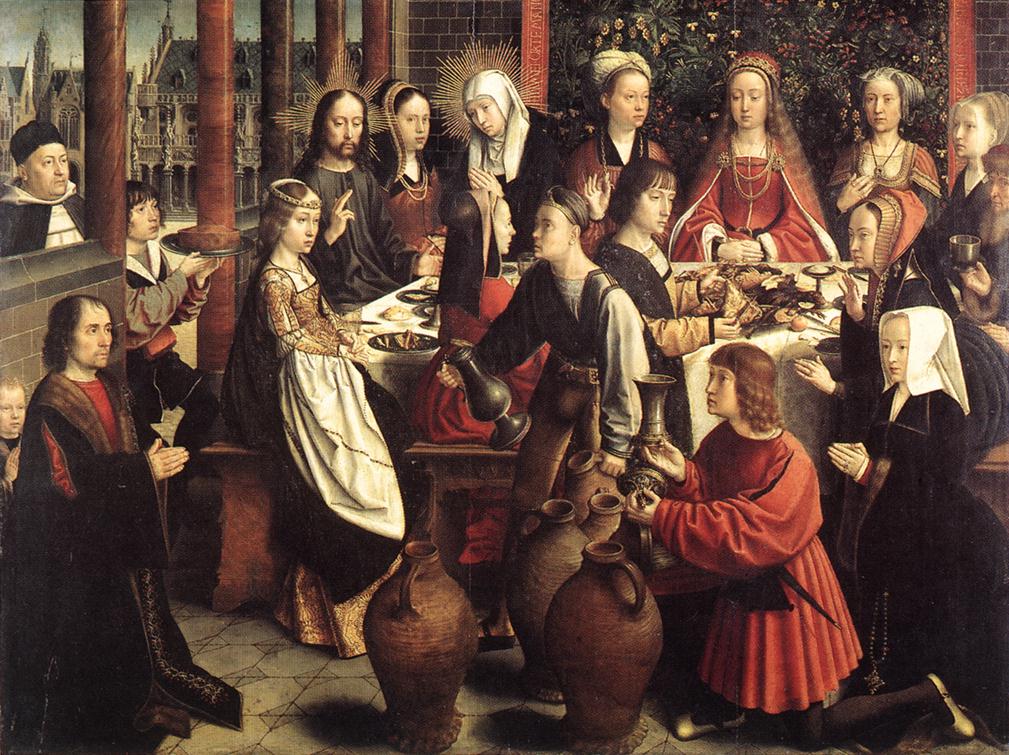
The Marriage at Cana, c. 1500, by Gérard David. Musée du Louvre, Paris. Mary pleads and worries, but Jesus says: “Woman, what have I to do with thee? Mine hour is not yet come.”

This week, I watched a very good video by the Swiss Bach Foundation (Bachstiftung) about today’s cantata 155 Mein Gott, wie lang, ach lange? I found it very insightful, helpful, and even entertaining, but was struck by its Calvinist character and was a bit disappointed by the director’s statement that he doesn’t know why this cantata starts with a movement for solo soprano. When reading Gardiner’s and Van Hengel’s discussions of this cantata, I liked their suggestions that the soprano lament refers to  Mary’s role in the Bible story of this Sunday, the Marriage at Cana. It made sense to me. This cantata, from 1715 and repeated in 1724, contains references to the wine as well as to the fact that Jesus says to his mother: “my time has not come yet.”

While the Lutheran church in Bach’s time did not regard Mary as a saint, let alone a mediator between God and the people, she was still an important person in the faith, and thus probably also for Bach. The three Marian feast days*  Luther kept on the calendar were important holidays and Bach wrote cantatas for all of them. Also, Bach wrote this cantata 155 in his Weimar years, when he explored a large number of works by (Catholic) Italian composers.

Listen to Montreal Baroque’s recording of cantata 155 on YouTube through a playlist I created. With Monika Mauch, soprano; Franziska Gottwald, alto; Charles Daniels, tenor; Harry van der Kamp, bass; Anna Marsh, bassoon. If you prefer to watch a live recording, you can find the live performance by the J.S. Bach Foundation here, with Julia Neumann, soprano; Margot Oitzinger, alto; Julius Pfeifer, tenor; and Raphael Jud, bass.

Read the German text with English translation of this cantata here, and find the score here.

The cantata is not so much a musical play with the soprano taking the role of Mary, but more a reference to her role in the Gospel story and an exploration of that theme: try to trust that everything will be okay in the end, try to not be in control all the time. The first movement has the character of a lament in music and text, you can picture the hand-wringing, the desperation. There is also the steady pedal point in the bass, similar to what Bach will use later in the opening chorus of the St. Matthew Passion.

However it is the second movement, not even sung by the soprano, and with text that is trying to urge her to “let go,” that secretly is the true lament, in the music that is. To hear or see this, the video by the Swiss Bach Foundation is terrific. Rudolf Lutz explains extremely well (with music examples) how the notes of the solo bassoon part form in fact a lament for three voices. This video has English subtitles. watch from 12:10  By the way: the composition I had to think of when hearing the “lamento bass” was Monteverdi’s  Lamento della Ninfa

If you would like to explore other cantatas for this second Sunday after Epiphany, I invite you to read my post about cantata 3 from 1725 here. It is all about hidden messages in the music of a an extremely beautiful composition with an equally heart wrenching—but completely different—opening movement as this cantata 155.

Wieneke Gorter, January 14, 2017, links updated January 31, 2020. Link for the score updated January 16, 2021, link for the J.S. Bach Foundation video with English subtitles updated January 15, 2022.

*The Purification of Mary on February 2, The Annunciaton of Mary on March 25, and the Visitation of Mary on July 2.

Trying to find some beauty in ugliness

13 Sunday Nov 2016

Posted by cantatasonmymind in 1723 Trinity season special series, Cantatas, Leipzig, Trinity

≈ Leave a comment

Tags

Bachstiftung, Gustav Leonhardt, Leipzig, Max van Egmond, Patrick Henrichs, slide trumpet, trumpet

trumpetsmemling

The least gruesome detail of Hans Memling’s “The Last Judgment”, a triptych painted between 1467 and 1471. National Museum, Gdansk, Poland.

This week I’ve been trying harder than ever in my life to find islands of beauty in a sea of ugliness. I found some: I witnessed communities coming together, had a very uplifting choir rehearsal, attended a concert at my daughter’s music school where the director gave a heart-felt speech, and the choir director had included We Shall Overcome in their part of the program. I have talked with my children about what it means to “stand up” for the millions who will suffer discrimination in the next four years in this country.  I realize I have many different readers of this blog, and that some of you might not share my political opinion. But I would urge you to be there for each other. And whomever you had been meaning to contact, whether it is a friend you should have apologized to four weeks ago, someone you know who is having a hard time, a relative you haven’t called in too long, or your representative in the House or Senate, write that letter, make that phone call. Don’t put it off.

In today’s cantata 90 Es reißet euch ein schrecklich Ende (A terrible end shall sweep you away), written for November 14, 1723, the 25th Sunday after Trinity, it is not easy to find beauty either, at least not the soul-soothing kind, since it is based on the Bible story of The Last Judgement, which is an ugly concept in my opinion. However this story was important in Bach’s time, and it was thus appropriate to let the Trinity season go out with a bang: two weeks in a row of impressive cantatas, including some of the most magnificent (and difficult!) arias for bass and trumpet in all of his work.

While Bach’s audience (the congregations of the St. Thomas and St. Nicholas churches in Leipzig) got plenty of tenor drama in the fall of 1723, it had been a long time (August 1, 1723 to be exact) since they had last heard an operatic aria for bass, with the majestic trumpet as accompanying instrument.

Since this emotional week also calls for some nostalgia, I’m going with the Leonhardt recording of this cantata, because I grew up listening to Max van Egmond sing these bass arias. The trumpet player on that recording however barely makes it, so if you would like to listen to a better player in that particular aria, and also see a close-up of the instrument, watch this video (of the bass aria only) by the Bach Foundation, with Patrick Henrichs on trumpet.

Find the text here, and the score here.

Wieneke Gorter, November 13, 2016, Links updated November 24, 2019.

Newer posts →

Recent Posts

  • “Missa Miniatura” by CONTINUUM/Elina Albach Even More Moving in 2025
  • Bachfest Leipzig 2025
  • Bach Cantatas for Christmas – 1724 and 1734 editions
  • Fourth Sunday of Advent – more insight into Cantata 62 helped me better understand Bach’s Christmas Oratorio
  • Saint Ambrose and Luther in Milan – Second Sunday of Advent

Archives

  • August 2025
  • July 2025
  • December 2024
  • November 2024
  • June 2024
  • January 2024
  • December 2023
  • October 2023
  • September 2023
  • August 2023
  • April 2022
  • February 2022
  • January 2022
  • December 2021
  • November 2021
  • June 2021
  • May 2021
  • April 2021
  • February 2021
  • January 2021
  • December 2020
  • November 2020
  • October 2020
  • September 2020
  • August 2020
  • July 2020
  • May 2020
  • April 2020
  • March 2020
  • February 2020
  • January 2020
  • December 2019
  • November 2019
  • May 2018
  • April 2018
  • March 2018
  • February 2018
  • January 2018
  • December 2017
  • November 2017
  • October 2017
  • September 2017
  • August 2017
  • July 2017
  • June 2017
  • May 2017
  • April 2017
  • March 2017
  • February 2017
  • January 2017
  • December 2016
  • November 2016
  • October 2016
  • September 2016
  • August 2016
  • July 2016
  • June 2016
  • May 2016
  • April 2016
  • March 2016
  • February 2016
  • January 2016

Enter your email address to follow this blog and receive notifications of new posts by email.

Join 338 other subscribers

Categories

  • 1723 Trinity season special series
  • Advent
  • After Easter
  • Ascension
  • Bach's life
  • Cantatas
  • Chorale cantatas 1724/1725
  • Christmas
  • Easter
  • Epiphany
  • Following Bach in 1725
  • Köthen
  • Leipzig
  • Septuagesima
  • Travel
  • Trinity
  • Weimar

Meta

  • Create account
  • Log in
  • Entries feed
  • Comments feed
  • WordPress.com

Website Built with WordPress.com.

  • Subscribe Subscribed
    • Weekly Cantata
    • Join 158 other subscribers
    • Already have a WordPress.com account? Log in now.
    • Weekly Cantata
    • Subscribe Subscribed
    • Sign up
    • Log in
    • Report this content
    • View site in Reader
    • Manage subscriptions
    • Collapse this bar
 

Loading Comments...