If you don’t feel like reading a long blog post and just want to learn about this Sunday’s cantatas, please watch Rudolf Lutz’ wonderful lecture/improvisation from 2020 about Cantata 44 and 183here. It is in English. Find my blog post about these same cantatas, highlighting completely different aspects of the pieces, here.
We tend to think that Christmas was the busiest time for Bach in Leipzig, writing cantatas for the three (!) Christmas Days, New Year’s Day, Epiphany, AND all the Sundays that fell in between those days. On the holidays, he would often perform the cantatas twice, once in the St. Nicholas Church, and once in the St. Thomas Church.
While working like this for two weeks in a row does sound crazy to us, we can still relate to it, because the Christmas season is often busy for most of us too.
But especially because of this wanting or needing to relate, I think we often forget that there was another period in the year for Bach in Leipzig that was equally busy: the time from Easter to Trinity. It was perhaps not as non-stop as the Christmas season, but it was much longer in time, and more laden with decision-making, so possibly more draining for the composer. We don’t know.
I would like to go back to my posts from the spring of 2018, when I was following Bach’s writing in the spring of 1725. Going forward, this year, I would like to keep following his cantata compositions from 1725. So let’s look at what this possibly exhausting period looked like for Bach in 1725. All the links in this following list refer to my own blog posts from 2018. The Easter Oratorio was rewritten from a previous work, but every single cantata Bach wrote after that was newly composed that year, 1725.
March 30, Good Friday: The second version of the St. John Passion, with a new opening chorus and several new arias.
April 1, Easter Sunday: First performance of the Easter Oratorio as well as a repeat performance of Cantata 4 Christ lag in Todesbanden (written much earlier in his career)
This Third Sunday after Easter, or “Jubilate” Sunday, was also the start of a three-week-long Trade Fair in Leipzig, lasting until Exaudi Sunday (this Sunday). Leipzig had three such events each year (the others were at Michaelmas and at New Year’s). In the 18th century Leipzig had become the centre for trade with Russia, Poland, and England. During the fairs the population of the city would grow to 30,000. Bach did business himself too during these times. He for example timed the publication of his Clavierübung to coincide with these fairs. In addition to that, I imagine that he would have had visitors in his house, and that he was making time to meet with friends and colleagues who were in town during this time.
April 29: Cantata 108 Es ist euch gut, daß ich hingehe
Philippe Herreweghe at the Bach Academy Bruges, photo by M.Hendrickx
On January 31, 2021, Philippe Herreweghe and his Collegium Vocale Gent performed three cantatas at the beautiful concert hall “De Singel” in Antwerp, Belgium. In my humble opinion, this was a very moving and inspired performance, and my hat is off to everyone on stage, that they were able to find this energy and inspiration in Bach’s music, in the texts, and in making music together, because they were performing without an audience. Please find the live video recording here on YouTube. Soloists are Dorothee Mields, soprano; Alex Potter, alto; Guy Cutting, tenor; and Peter Kooij, bass.
I provide a bit of a review and a bit of a listening guide here, with links to my blog posts from previous years about these three cantatas. I did not grow up with any of these cantatas, they weren’t part of the repertoire my mother played on the turntable at home. I learned about them in the process of doing research and writing for this blog (and through other people, in the case of Cantata 127).
Cantata 127 Herr Jesu Christ, wahr’ Mensch und Gott
This cantata, written for today, the last Sunday before Lent, is a great choice for the start of a concert, because it immediately grabs you and draws you in. I already hold a special place in my heart for this music because of the soprano aria (beautifully sung here by Dorothee Mields) being performed at my mother’s funeral service in The Hague in 2010. But even without that, the work is in my all-time top 10. And I am not alone: Bach biographer Spitta called it “perhaps the most important” cantata, and it received “the most beautiful” qualification by Arnold Schering as well as Ton Koopman.
The cantata is part of Bach’s 1724/1725 cycle of chorale cantatas, and compared to all previous compositions in that cycle, this opening chorus is the most complex and intricate. Click on the link at the end of this paragraph to read why. I love hearing Collegium Vocale sing this. Dorothee Mields and Peter Kooij are fabulous in their arias, and I enjoy hearing and watching tenor Guy Cutting sing. He’s a new star in the Herreweghe firmament. The soprano aria is of course stunning, but what about that bass aria? Whether a foreshadowing of the St. Matthew Passion or a dramatic end to the series of chorale cantatas, Bach had clearly made “studies” for it in his previous three cantatas of that year. Read all about it in my blog post from 2018.
Cantata 138 Warum betrübst du dich, mein Herz
I am so happy with the video recording from January 31, because it eliminates a dilemma for me. When I first wrote about this cantata (written for the 15th Sunday after Trinity in 1723), I wasn’t able to choose between Herreweghe’s recordings from 1992 and 2013, but I feel the video recording from this year is the clear winner! I love the inspired singing by all four soloists, but find Alex Potter’s singing in this cantata especially stunning. In his recitative (starting at 26:23), the combination of his understanding of the text and what he can do with his voice moves me deeply. So much that when the choir basses then follow with their beautiful entrance, I am close to tears. If you feel I’m getting too sentimental here, don’t worry. My blog post from 2016 is about completely different things: a European children’s animation, a possible, “movie script scenario,” explanation of the relatively simple text in this cantata, and Bach’s recycling of the bass aria.
Cantata 161 Komm, du süße Todesstunde
What a wonderful surprise that Herreweghe included this cantata (written for the 16th Sunday after Trinity but also for the Purification of Mary/Presentation of Jesus at the Temple, which was February 2) in this program. It is such a beautiful and moving composition. In my blog post from this past fall I could only describe how in 2019, when programming the All Souls program for the Netherlands Bach Society, Alex Potter had the brilliant idea to combine the recorders from the Weimar version of this cantata with the sung chorale Herzlich tut mich verlangen nach einem sel’gen End from the Leipzig version. What a delight to see that Herreweghe had adopted this exact idea for this performance in Antwerp, and that we can thus hear and see Alex Potter and Dorothee Mields perform this opening movement together. I love all the singing and playing in this cantata very much, but for me, the tenor aria can’t rival the magic of Shunske Sato accompanying Thomas Hobbs in those All Souls concerts by the Netherlands Bach Society in 2019 (as described here).
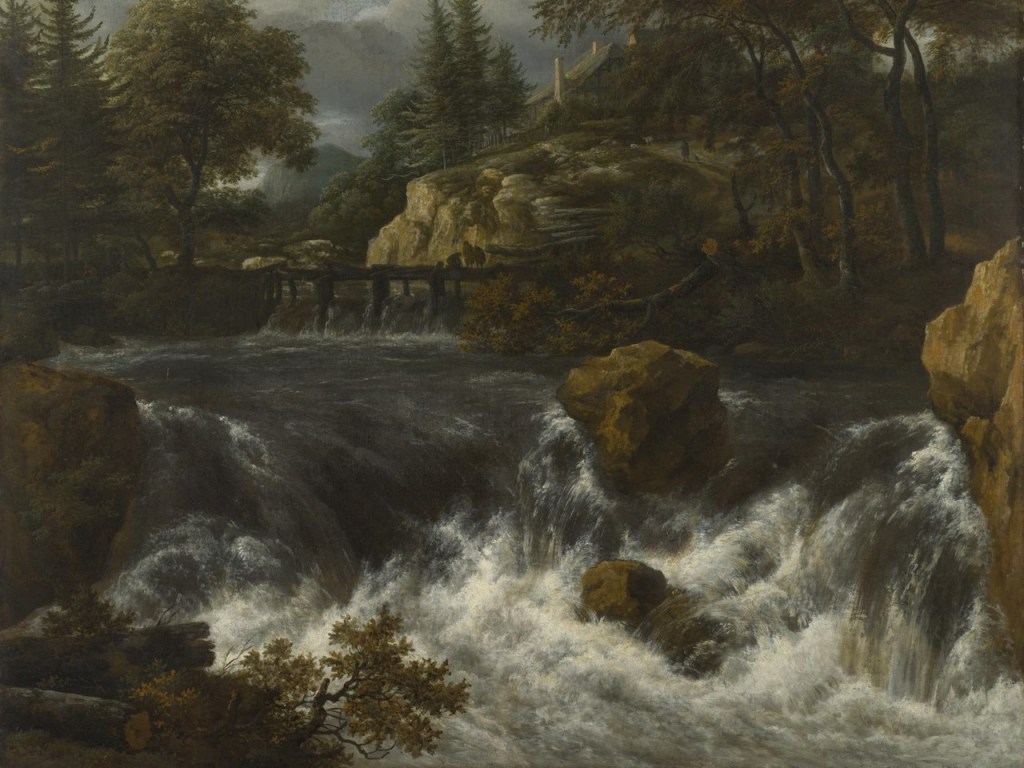
A Waterfall in a Rocky Landscape by Jacob van Ruisdael, probably 1660-70. Oil on canvas. The National Gallery, London, UK.
It is now the 24th Sunday after Trinity. Depending on the year, this Sunday can fall anywhere in the month of November, from the 1st to the 26th day of the month.
In 1723, during Bach’s first year in Leipzig, this day fell on November 7, with two more Sundays to go before Advent. For that day Bach wrote the apocalyptic Cantata 60, O Ewigkeit, du Donnerwort! I have the best memories of doing the research about this cantata, from finding out how Bach’s music had inspired a lithographer in 1914 as well as Alban Berg in 1935, to being pleasantly surprised by Robin Blaze’s marvelous singing on the Bach Collegium Japan recording. Read it all in my post from 2016.
The next year, in 1724, this Sunday fell November 19, the penultimate Sunday before Advent that year. For that Sunday Bach wrote Cantata 26 Ach wie flüchtig, ach wie nichtig. When I first listened to this cantata in 2017, I labeled it “The Water Cantata” in my head, because there is moving water in both the tenor aria and the bass aria, from a rushing brook to a stormy white water river. The combination of bass voice with the three oboes and bassoon even made me think of Hades in Monteverdi’s Orfeo. I remember finding it special, all that water, especially since I had just come back from a short visit to Yosemite National Park with my family, where I had admired waterfalls and rivers. There is now an excellent J.S. Bach Foundation video of this cantata available on YouTube. You can really hear the water move, especially in their terrific rendition of the tenor aria. Find it here. Soloists are Susanne Frei soprano; Antonia Frey, alto; Daniel Johannsen; tenor; Klaus Häger, bass.
Find the score for Cantata 26 here, and the texts & translations here.
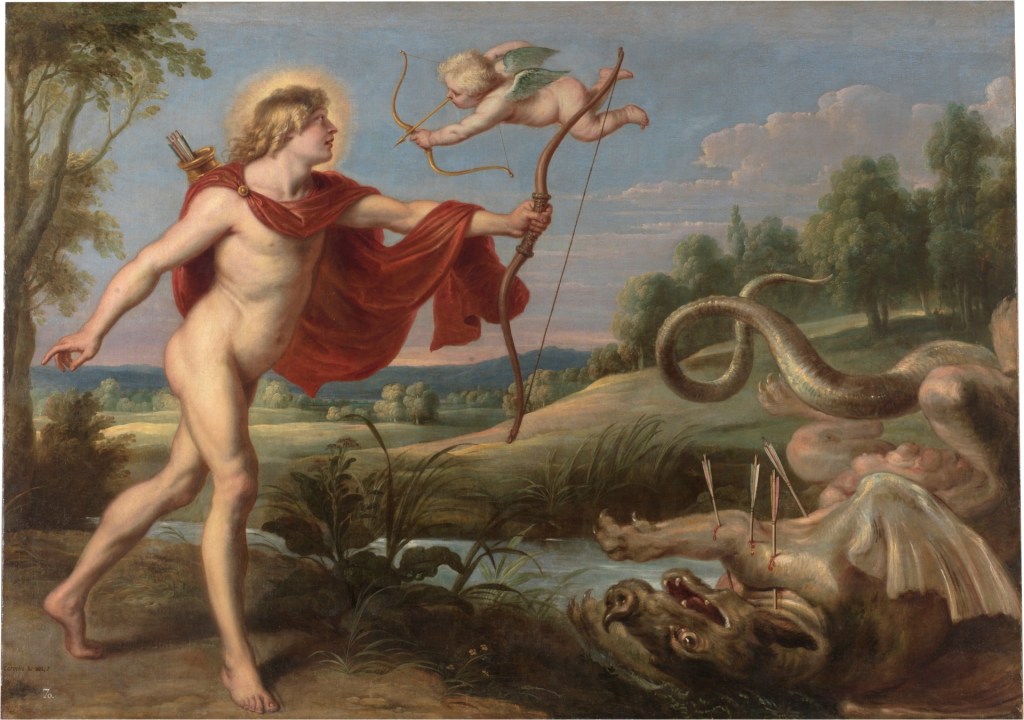
Apollo and the Python by Cornelis de Vos, 1636 – 1638. Oil on Canvas, after a sketch by Rubens. Museo del Prado, Madrid, Spain (not on display).
I always write about bass arias around this time of year (see this post). But let’s not forget about the tenor arias. As I’ve said before, I believe that Bach wrote some of his best trio sonatas in the form of tenor arias. Wonderful examples of this are the following tenor arias from the Fall of 1724:
from Cantata 78, sung here by Howard Crook on the Herreweghe recording from 1988
from Cantata 5, sung here by Raphael Höhn with the J.S. Bach Foundation
from Cantata 38, sung here by Johannes Kaleschke with the J.S. Bach Foundation — this is the “consolation” aria I mentioned in my previous blog post.
And for today, the 23rd Sunday after Trinity, the fabulous tenor aria from Cantata 139 Wohl dem, der sich auf seinen Gott, sung here by Johannes Kaleschke with the J.S. Bach Foundation. When I looked at the text of this aria again today, I realized that if Cantata 139 were an opera, this aria would be Joe Biden’s:
Gott ist mein Freund; was hilft das Toben, So wider mich ein Feind erhoben! Ich bin getrost bei Neid und Hass. Ja, redet nur die Wahrheit spärlich, Seid immer falsch, was tut mir das? Ihr Spötter seid mir ungefährlich.
God is my friend; what use is all the raging that an enemy has raised against me! I am consoled in the midst of envy and hate. Yes, though you speak the truth only rarely, though you are always false, what is that to me? You scoffers are to me no danger.
When I wrote this post three days ago, I had been feeling pretty sad. I missed connections, I was once again shocked by how people in this world can behave towards one another, and baffled as always by the lack of empathy shown by the leader of my adopted country and his enablers. So I wrote:
“A word, or token of consolation amidst all the suffering. Don’t we all need that this year, this month, this week? I do. Maybe Bach did too during this week in October 1724.”
This is still true of course, but over the past two days my spirits were lifted in such a way that it felt strange to just post my somewhat somber message from Thursday. So now I’m typing again on a Sunday when I really wanted to be done writing before the weekend 🙂
Over the past two days I was inspired by creativity in my family, in my neighborhood, and in photos I saw posted by friends in other parts of the San Francisco Bay Area and the United States. It has to do with how many of us found new ways of celebrating Halloween. From contraptions for sliding candy down a rain gutter, outdoor movie screenings, extensive decorations in front yards and on front windows (so people just going for a walk would have something to look at), individually wrapped goody bags clipped to a laundry line, to treasure hunts for small groups, it was all there. And because of the email and text conversations with the neighbors beforehand, our family needing to work as a team for part of the day to execute our own plans, and my husband and I sitting by the fire pit in our front yard in the evening (to make sure our goody bags wouldn’t get swiped and to see some costumes), I think I felt a deeper connection to my community here than I have at some other times on this holiday.*
Back to Bach: my favorite cantata for this 21st Sunday after Trinity is Cantata 38 Aus tiefer Not schrei ich zu Dir (Out of the depths I cry to Thee). In my post from 2017 I recommended Herreweghe’s recording, and I still prefer that one for Peter Kooij’s singing of the bass part in the penultimate movement. But for all the other movements, I’m quite taken by the interpretation of the J.S. Bach Foundation. Find it here on YouTube. Soloists are: Guro Hjemli, soprano; Ruth Sandhoff, alto; and Johannes Kaleschke, tenor.
Please find the German text with English translations here, and the score here.
It is the tenor aria that brings the consolation, in text as well as in music. On this recording this exquisite piece of chamber music is beautifully performed by Johannes Kaleschke, tenor, and Meike Güldenhaupt and Gilles Vanssons, oboes.
To read more about this cantata in the context of Bach’s reverence for Martin Luther (just as this year, in 1724 Reformation Day, October 31, almost coincided with the 21st Sunday after Trinity), and understand why there are four trombones standing amidst the choir, find my blog post from 2017 here. In that post, I compare the opening chorus of this cantata with the one from Cantata 2, which is for a different Sunday, but also celebrates a chorale by Luther. Since 2017, the J.S. Bach Foundation has released a very compelling video registration of that cantata as well. Find my listening guide for that specific recording here.
Wieneke Gorter, November 1, 2020.
*Last year I wasn’t even in California on Halloween, but attending concerts in the Netherlands. Read about that here and here.
My absolute favorite recording of Cantata 180 Schmücke dich, o liebe Seele(Adorn yourself, beloved soul, from October 22, 1724) is the video registration by the J.S. Bach Foundation from 2009. I love how the entire ensemble truly brings luster into the opening chorus and the soprano aria, and how the instrumentalists illustrate the “knocking” in the tenor aria. Also: Rudolf Lutz’s lecture about this cantata is in my top five of all his lectures I’ve watched so far.
When I first wrote about this cantata, in 2017, only the soprano aria from this video registration was available on YouTube, and Lutz’s lecture didn’t have English subtitles yet. However, this has all changed, and the entire cantata is now available here on YouTube, and Lutz’s lecture, now with English subtitles, can be found here. Soloists in the performance: Maria Christina Kiehr, soprano; Jan Börner, counter-tenor; Julius Pfeifer, tenor; and Fabrice Hayoz, bass.
Find the German text with English translation here, and the score here.
When I listened to Lutz’s lecture again this week, I noticed some things I had missed when listening to it in 2017. For example, around 2 minutes into the lecture, when talking about the opening chorus, Lutz says:
“I like to compare it to a flowing wedding garment of the noblest kind.”
The title of the cantata is “Schmücke dich” (Adorn yourself) and the 20th Sunday after Trinity was a Communion Sunday in Leipzig. As I mentioned in my post from 2017, it was normal in Bach’s time to compare the Communion between Jesus and the believer, or Jesus and the soul, to the marriage between groom and bride. So it makes sense to use this image of a bride dressing up for her wedding. In addition, the reading for this Sunday mentions wedding guests being sent away because they are not dressed for the occasion. So on this 20th Sunday after Trinity, we can pay a bit more attention to clothing.
Lutz being Lutz, a talented improvisor, and often one to throw in some local folklore to make his Swiss audience laugh, makes a joke about that “wedding garment of the noblest kind,” and adds: “Perhaps by Akris, or so.” I had to Google that one, and it turns out that Akris is a Swiss fashion house that still has its headquarters in St. Gallen (the same town where the J.S. Bach Foundation resides), and has been owned by the same family continuously. There’s a nice New York Times article about its current creative director Albert Kriemler here.
I started thinking: if Bach also paid more attention to clothing for this Sunday, what would he have had in mind on the words “Schmücke dich”?
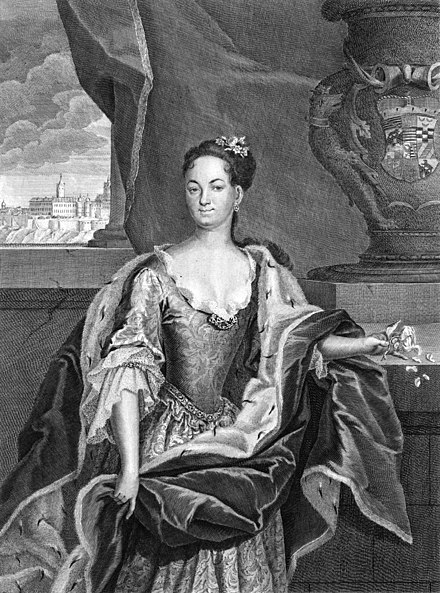
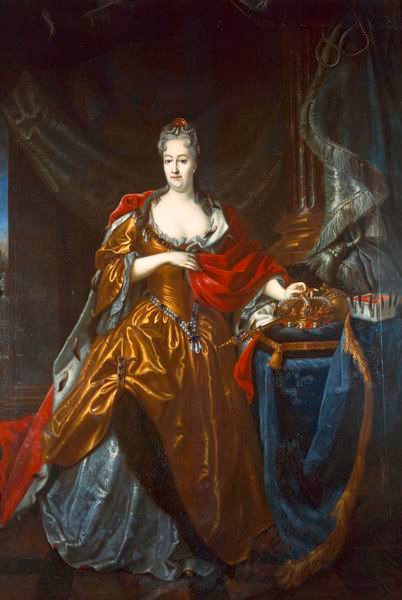
We know that the Rhine wine was flowing at Bach’s own wedding to Anna Magdalena in 1721, but for the rest it would probably have been a simple affair, since it was held at home. There are no paintings of the weddings of his employers, nor of the weddings that would have taken place in Leipzig at the time. However there are paintings of noble dresses Bach might have seen on official occasions, worn by the Princess his employer in Köthen married a little later in December 1721*, and by the consorts of dignitaries Bach would have visited in Dresden and Berlin. See pictures at the top of this post. This would then also be the style in which the noblewomen of Leipzig would have dressed up to go attend church, especially on an important Sunday such as this one.
Read more about all the luster in this cantata, and about an impatient groom/Jesus in my blog post from 2017. I’m apparently always late in posting for this Sunday, whether there are choir performances going on in my life or not.
Wieneke Gorter, October 25, 2020.
*In a rare letter to a friend, Bach mentioned Friederike Henriette and the absence of her interest in music as one of his reasons for leaving Köthen in 1723. However it was probably for financial demands by the Prussian military that the Prince of Anhalt-Köthen had less and less funds to spend on music. Henriette died in April of 1723, 14 months after her marrying Leopold of Anhalt-Köthen. Bach moved to Leipzig in May 1723.
Fresco’s in the Brancacci Chapel of Santa Maria del Carmine, Florence, Italy, by Masolino, 1424-25. One of the miracles pictured is TheHealing of the Cripple, which was the Gospel story for the 19th Sunday after Trinity. Photo by the author.
At the end of a two-week trip to Italy in the summer of 2018 (my family’s first visit to that country), we would have only one afternoon and night in Florence. After booking our hotel in a neighborhood a good friend had recommended, I saw on Google maps that the hotel was around the corner from a church called Santa Maria del Carmine.
The name rang a bell, but I didn’t immediately realize why. Then I started searching my blog, and yes: there it was, the fresco of TheHealing of the Cripple, from the Brancacci Chapel in that church, in my blog post from 2016 about Cantata 48. After seeing a lot of art in other cities in Italy and with a big train trip ahead of us, we decided to have this be the only art we would go see in Florence, and save the rest for another trip. It was a good decision, because this way I could really let it sink in that I was seeing these frescos in real life, and this way we had some time left to eat ice cream, rest, see the sun set over the city, and enjoy a good meal.
In my blog post from 2016, I recommended Herreweghe’s recording of Cantata 48Ich elender Mensch. (from 1723), and I still stand by that choice. Find all the links to the recording, a comparison with the St. Matthew Passion, and my explanation of the silver lining in the opening chorus here.
One year later, in 2017, I wrote about Cantata 5, Wo soll ich fliehen hin? which Bach wrote for this same 19th Sunday after Trinity, in 1724. Since then, I have a new favorite recording of this cantata: the excellent 2018 performance by the J.S. Bach Foundation that was released to YouTube in April 2019. You can find that video here. Soloists are: Soprano: Mirjam Berli; Alto: Jan Börner; Tenor: Raphael Höhn; Bass: Manuel Walser; Violin: Eva Borhi; Tromba da tirarsi: Patrick Henrichs.
Find the German text with English translation of Cantata 5 here, and the score here.
For a list of the bass arias with trumpet the Leipzig congregations would have heard between June 1723 (when Bach started working in Leipzig) and October 1724 (when he wrote Cantata 5), including links for listening, read my blog post from 2017 here.
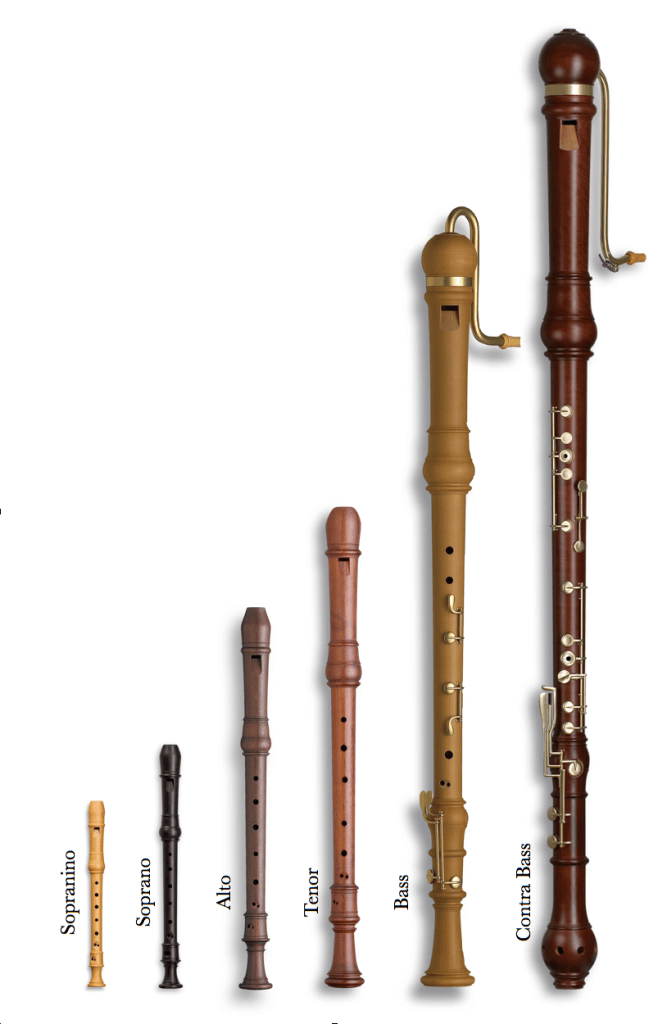
On Sunday October 8, 1724, Bach introduced a new instrument to his Leipzig cantata audiences: the flauto piccolo, or sopranino recorder, in Cantata 96 Herr Christ, der einge Gottessohn. He did this to illustrate the word “Morgenstern” (Morning Star) in the text of the opening chorus, creating a constellation over the highest notes of the choir sopranos with the even higher notes of the recorder.
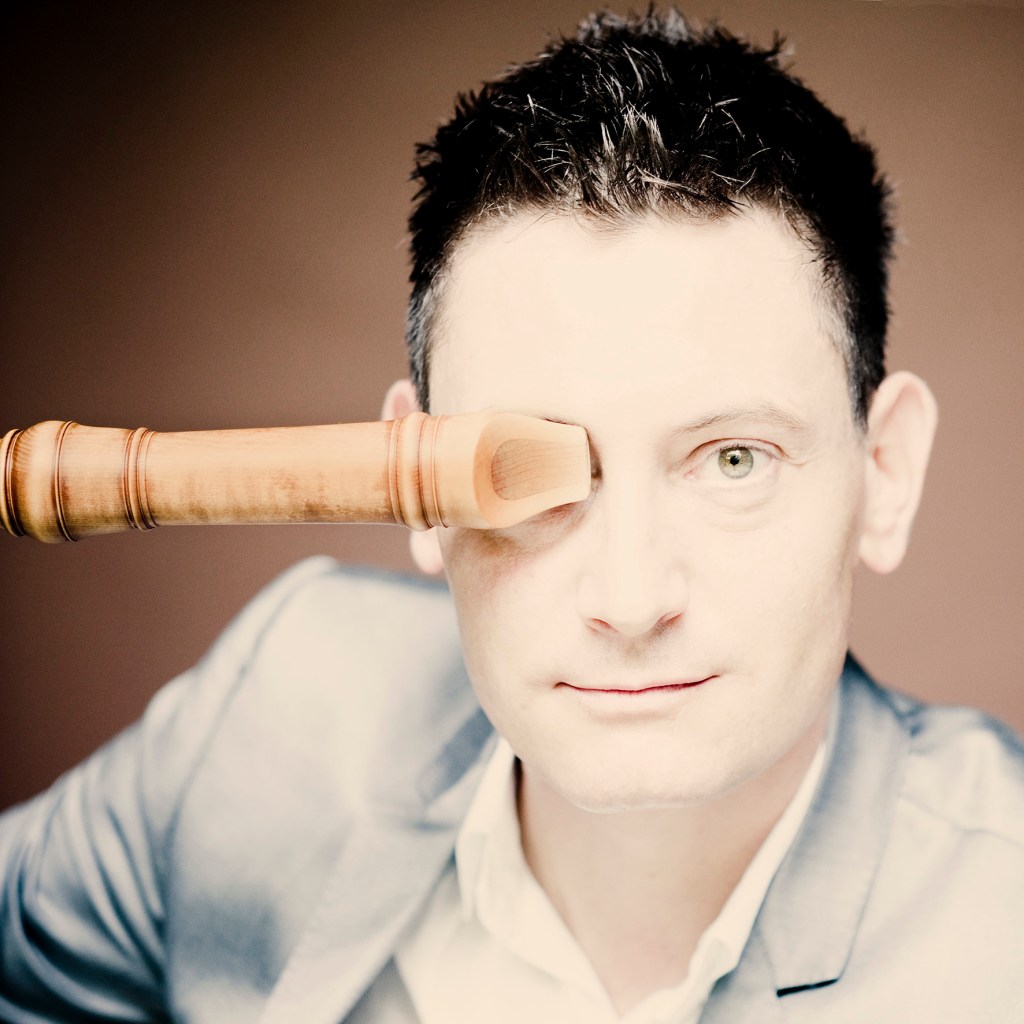
Thanks to a videoby the J.S. Bach Foundation that was released to YouTube in 2018, you can now watch an excellent recorder player, Maurice Steger, in action on this instrument in this cantata.
Go to my blog post from 2017 (updated with the new recording and a few other things), to read why Bach needed a chorale with the word “Gottessohn” (son of God) for this cantata.
This 17th Sunday after Trinity has been connected to more discoveries than any other so far for me, and I keep making new ones:
In 2016, I wrote a post about Cantata148 Bringet dem Herrn Ehre seines Namens, then learned a lot of new information during the months that followed, which led me to completely revise the post in February 2017. It talks about Dresden concertmaster Johann Georg Pisendel and his influence on the violin solos Bach wrote in Leipzig. Read it here.
Marc Hantaï
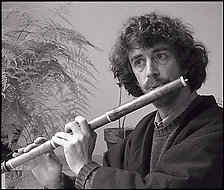
In 2017, I realized that at least two arias Bach wrote for this Sunday make me cry, not because of the singers, but because of the instrumental solos that accompany those arias. Read it here, in a post that introduces Cantata 114 Ach, lieben Christen, seid getrost. At that time, the best recording I could find was a live radio registration of a performance led by Gustav Leonhardt in 1988. All this because of the tenor aria.* I knew who the tenor was (John Elwes), but could only make an educated guess about the extraordinary flute player, probably Marc Hantaï. That recording also had my first countertenor love, Gérard Lesne, singing the alto aria.
David Erler. Photo by Björn Kowalewsky
At the last gathering of the Berkeley Bach Cantata Group I attended before the Shelter In Place started (and all rehearsals and performances stopped) here in the SF Bay Area, I got to discuss Bach’s “Pisendel style” violin solos a bit with the first violinist of that group. In an email-exchange that followed, he pointed out a countertenor he liked, but who I had never heard of before: David Erler.
Then this week, while checking if any new recordings of cantatas 148 or 114 had come out since I wrote those blog posts, I discovered to my great delight that in September 2018 the J.S. Bach Foundation recorded Cantata 114 Ach, lieben Christen, seid getrostwith … Marc Hantaï playing flute in the tenor aria! (I now for sure know it was him in that 1988 Leonhardt recording) and … David Erler singing the alto aria (and doing an excellent job). While it doesn’t rival the energy of the soprano solo on the Gardiner recording (for this, please read my blog post from 2017 about this cantata), nor Peter Kooij’s solo on the Leonhardt recording, it is a fabulous and very moving performance, and you can see Marc Hantaï play. Find this live video recording by the J.S. Bach foundation here on YouTube. Soloists are: David Erler, alto; Georg Poplutz, tenor; and Wolf-Matthias Friedrich, bass.
Find the German texts with English translations of Cantata 114 here, and the score here.
In 2018, I realized that Bach reworked the incredibly moving tenor aria with flute from Cantata 114 into a faster tenor aria with oboe for Cantata 124, and that nobody else seemed to have noticed this yet. Read that here.